
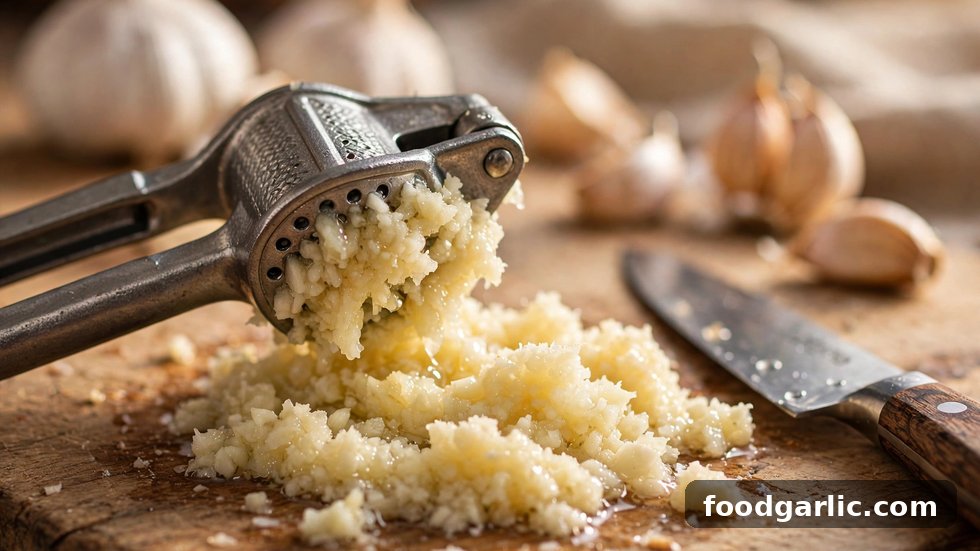
You have probably heard the advice: crush garlic, then wait 10 minutes before cooking. But why does crushing matter at all, and what exactly is happening during those 10 minutes? The answer is a piece of plant chemistry worth understanding.
In this article you will learn how allicin is created inside a garlic clove, why intact garlic contains none of it, what the enzyme alliinase does, how heat and acid affect the process, and how to apply the science in your everyday cooking.
Table of Contents
- The Two Compartments: Why Intact Garlic Has No Allicin
- The 10-Minute Reaction: Alliinase at Work
- What Kills the Enzyme: Heat, Acid, and Age
- Allicin Is Unstable — And That Is Normal
- Applying the Science in Your Kitchen
- Common Myths About Garlic Chemistry
- Frequently Asked Questions
The Two Compartments: Why Intact Garlic Has No Allicin
A whole, unbroken garlic clove contains almost no allicin. Instead, it stores the raw materials in separate compartments: an amino acid derivative called alliin in one part of the cell, and an enzyme called alliinase in another.
This is a defense system. When an insect bites the clove, the compartments rupture, the enzyme meets the substrate, and allicin is produced on the spot — a pungent weapon against pests and microbes. You trigger the same reaction every time you crush, chop, or chew garlic.
The 10-Minute Reaction: Alliinase at Work
Once the compartments break, alliinase starts converting alliin into allicin immediately. But the conversion is not instant — it takes roughly 10 minutes at room temperature to reach near-maximum allicin levels in crushed garlic.
What the timing looks like
- 0–2 minutes: reaction begins; allicin levels are still low.
- 5 minutes: a large fraction of the alliin has converted.
- 10 minutes: near-maximum allicin formation for most preparations.
- Beyond 15–20 minutes: allicin begins breaking down into other compounds.
The 10-minute rule is a guideline, not a stopwatch exercise. Finely minced garlic reacts faster than roughly chopped clove because more cell walls are broken. The point is simply: do not rush from crushing to heat.
What Kills the Enzyme: Heat, Acid, and Age
Alliinase is a protein, and like most enzymes it is sensitive to its environment. Three things shut it down before it can finish its work.
Heat
Heating above roughly 60°C (140°F) deactivates alliinase. Drop freshly minced garlic straight into a hot pan and the enzyme dies before producing much allicin. That is why the crush-then-rest method matters: allicin formed during the rest survives cooking far better.
Acid
Strongly acidic conditions slow alliinase. If you crush garlic directly into lemon juice or vinegar, allicin formation drops — though it still occurs. For maximum yield, crush first, wait, then add acidic ingredients.
Age and storage
Old, dried-out, or sprouting garlic has less active alliinase and less alliin to convert. Fresh, firm cloves give you the strongest reaction — one more reason to buy garlic often.
Allicin Is Unstable — And That Is Normal
Here is the part most articles skip: allicin itself is unstable. Within hours at room temperature, it breaks down into a family of other sulfur compounds, including diallyl disulfide, ajoene, and vinyldithiins.
This is not a loss — it is a transformation. Many of these breakdown products are the compounds actually studied for heart-health and antioxidant effects, so you do not need to eat garlic the second you crush it. Just avoid extremes: do not crush it hours ahead and leave it in a hot kitchen, and do not cook it the instant you mince it.
Applying the Science in Your Kitchen
The science translates into a few simple habits:
- Crush or mince before anything else. Make garlic the first ingredient you prep so it rests while you work on the rest of the dish.
- Let it rest 10 minutes. Spread the crushed garlic on the cutting board so air reaches it.
- Keep acid away at first. Add lemon juice, vinegar, or tomatoes after the rest, not before.
- Add garlic late in cooking. Stir it into soups, sauces, and stir-fries in the final minutes.
- Use fresh bulbs. Firm cloves with tight skins give the strongest enzymatic reaction.
One more trick: if you forgot to rest your garlic before cooking, stir a little raw crushed garlic into the finished dish off the heat. The fresh garlic brings active enzyme that also helps convert the alliin in the cooked portion.
Common Myths About Garlic Chemistry
A few claims deserve correction. First, swallowing whole cloves for health: without crushing, very little allicin forms — chewing or mincing is essential. Second, garlic powder: most commercial garlic powder lost its alliinase during drying, so it flavors food but contributes little allicin.
Third, boiling garlic whole in soup: the heat kills the enzyme inside the intact clove, and without crushing there is minimal allicin to begin with. Crushing first changes the equation completely. Finally, microwaving destroys everything is wrong too — short bursts are gentler than prolonged high-heat frying.
Frequently Asked Questions
Does chewing garlic count as crushing?
Yes — chewing breaks cell walls thoroughly and mixes alliin with alliinase. That is why eating raw garlic releases its full pungency. The 10-minute rest still helps for cooking, but for raw eating, chewing does the job.
Why does garlic burn my mouth when raw but not when cooked?
The burning sensation comes from allicin activating heat and pain receptors in your mouth — similar to chili heat. Cooking deactivates the enzyme and transforms these compounds, which is why roasted garlic tastes sweet and mild.
Can I crush garlic the night before and store it?
You can, but the allicin will largely convert into other sulfur compounds overnight. Refrigerated in an airtight container it keeps well for flavor, though the fresh allicin peak is gone. For maximum benefit, crush fresh.
Does pressing garlic in a garlic press work as well as mincing?
Yes — a garlic press ruptures more cell walls than chopping, so it produces allicin quickly and efficiently. Some chefs dislike presses because the intense crush can taste harsher, but chemically, pressing is excellent.
1 thought on “The Science Behind Crushing Garlic: Why Allicin Needs 10 Minutes”