
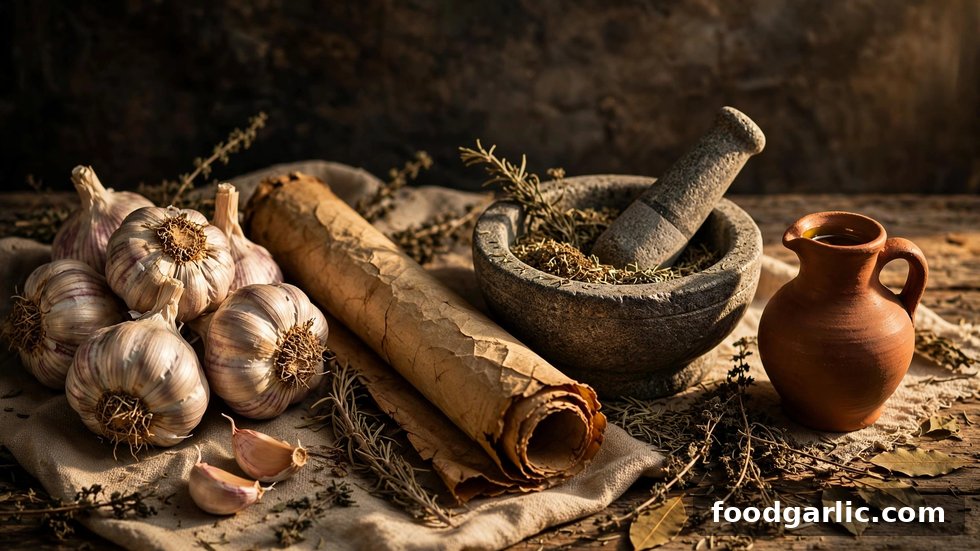
Garlic has been saving lives — or at least believed to — for over 5,000 years. Egyptian pyramid builders ate it for strength, Greek athletes dosed it before competition, and medieval doctors prescribed it against the plague. Today it sits in laboratories being studied for heart health and immunity.
This is the story of garlic’s remarkable journey: from sacred ancient medicine to kitchen staple to modern superfood — and what the historical record actually tells us versus the myths.
Table of Contents
- Ancient Egypt: Food of the Pyramid Builders
- Greece and Rome: Athletes, Soldiers, and Healers
- Asia: Ayurveda and Traditional Chinese Medicine
- The Middle Ages: Plague Remedy and Peasant Staple
- The Modern Era: From Folk Remedy to Laboratory
- Garlic Today: Superfood Status and What It Means
- Frequently Asked Questions
Ancient Egypt: Food of the Pyramid Builders
Garlic’s documented history begins in ancient Egypt around 3000 BCE, where it was so valued it served as currency: pyramid laborers received daily garlic rations, and accounts describe a workers’ strike when the supply ran short.
The Ebers Papyrus (circa 1550 BCE), one of the oldest medical texts in existence, lists garlic as a remedy for 22 ailments — and preserved cloves were found in Tutankhamun’s tomb. Egyptians also fed garlic to soldiers and laborers in the belief that it increased strength and courage — an early version of sports nutrition.
Greece and Rome: Athletes, Soldiers, and Healers
The ancient Greeks fed garlic to Olympic athletes before competition for stamina, and Greek soldiers carried it for courage. It was also placed at crossroads as an offering to Hecate — the beginning of garlic’s long association with warding off evil.
Hippocrates prescribed garlic for respiratory problems and parasites; Pliny the Elder listed 61 ailments it could treat; and the physician Dioscorides recommended it as a dewormer — a use with genuine support from modern research. Roman soldiers ate it as a daily ration, spreading garlic cultivation across Europe as the empire expanded.
Asia: Ayurveda and Traditional Chinese Medicine
In Ayurveda, India’s traditional medicine system, garlic (lasuna) has been used for over 3,000 years. Ancient texts describe it as a rejuvenating tonic for the heart, digestion, and respiratory system — uses that echo in modern cardiovascular research.
Traditional Chinese Medicine adopted garlic by the first century CE, using it to “warm” the body, expel toxins, and treat digestive and respiratory complaints. Chinese physicians prescribed it for diarrhea and intestinal parasites — applications where garlic’s antimicrobial properties genuinely help.
Across Asia, garlic also became culinary infrastructure. Indian curries, Chinese stir-fries, Korean kimchi, Thai pastes — the continent’s great cuisines are built on garlic, and its medicinal reputation traveled with every recipe.
The Middle Ages: Plague Remedy and Peasant Staple
During the Black Death (1347–1351), garlic became one of Europe’s most trusted plague protections — the famous “Four Thieves Vinegar” of garlic macerated in vinegar was said to protect grave robbers. Whether it worked is doubtful, but the legend cemented garlic’s reputation as a protective charm — and gave us its most famous myth, repelling vampires, since a plant believed to ward off sickness naturally became a ward against supernatural evil too.
For peasants, garlic was simply survival food: cheap, storable, and nutritious. The wealthy often avoided it — garlic breath was considered vulgar, a class prejudice that lingered for centuries.
The Modern Era: From Folk Remedy to Laboratory
Garlic entered modern science in 1858, when Louis Pasteur documented its antibacterial properties. During both World Wars it served as a battlefield antiseptic — Russian soldiers called it “Russian penicillin.” The breakthrough came in 1944, when Chester Cavallito isolated and named allicin, letting researchers study exactly what made garlic work.
Since then, thousands of studies have investigated garlic’s effects on blood pressure, cholesterol, immunity, and infection. The evidence is strongest for modest cardiovascular benefits — particularly blood pressure support from aged garlic extract — while other traditional claims remain unproven or preliminary.
Garlic Today: Superfood Status and What It Means
Today garlic is a $20+ billion global crop, with China producing the majority of the world’s supply. It has been crowned a “superfood” — a marketing term with no scientific definition, but one that reflects genuine nutritional density: garlic delivers vitamin C, B6, manganese, and unique sulfur compounds for almost no calories.
The honest modern verdict: garlic is a legitimately healthy food with some well-studied benefits (particularly cardiovascular) and many traditional uses that remain unproven. It is not a miracle cure — but 5,000 years of human experience plus modern clinical trials make it one of the most credible “functional foods” in existence.
Perhaps the most remarkable thing is continuity. The Egyptian laborer eating garlic for strength, the Greek athlete dosing before competition, and the modern cook crushing a clove for heart health are all reaching for the same plant, for strikingly similar reasons.
Frequently Asked Questions
How long have humans used garlic as medicine?
At least 5,000 years. The Ebers Papyrus from 1550 BCE prescribes garlic for 22 ailments, and archaeological evidence suggests use even earlier in Central Asia, where garlic originated. It is one of humanity’s oldest documented medicines.
Did garlic really protect people from the plague?
There is no evidence garlic protected anyone from bubonic plague — the famous “Four Thieves Vinegar” story is legend, not documented history. However, garlic does have real antibacterial properties, which likely fed the belief. Its plague reputation was more folklore than medicine.
Why is garlic associated with vampires?
The vampire-garlic link comes from Eastern European folklore, where garlic was believed to ward off all evil — disease, witches, and demons alike. Bram Stoker’s 1897 novel Dracula popularized it globally. The root is garlic’s ancient reputation as a protector against sickness.
When was allicin discovered?
In 1944, by American chemist Chester J. Cavallito, who isolated the compound and named it allicin. This was the turning point that moved garlic from folk remedy to serious scientific study, since researchers could finally test a defined active compound.
2 thoughts on “The History of Garlic: Ancient Medicine to Modern Superfood”