
Long before antibiotics existed, healers packed wounds with crushed garlic and fed it to the sick. They did not know about bacteria — but modern lab research suggests they were onto something real. How exactly does garlic fight microbes?
In this guide, you will learn how garlic’s antibacterial compounds work, what laboratory and clinical studies have found, which infections garlic has been studied for, and — crucially — the limits of what garlic can do. You will get science, not hype.
Table of Contents
- Allicin: Garlic’s Antibacterial Weapon
- How Garlic Attacks Bacteria (The Mechanisms)
- What Lab Studies Have Found
- What Human Studies Show — and Don’t Show
- Practical Ways People Use Garlic’s Antimicrobial Power
- Important Limits and Safety Warnings
- Frequently Asked Questions
Allicin: Garlic’s Antibacterial Weapon
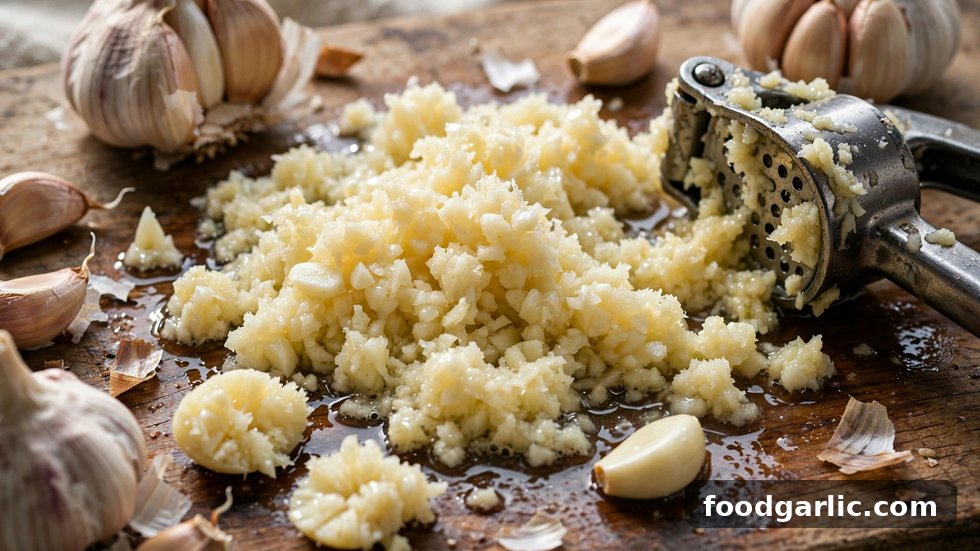
Garlic’s antimicrobial power centers on allicin — a sulfur compound that does not exist in an intact clove. When you crush, chop, or chew garlic, the enzyme alliinase converts the precursor alliin into allicin within seconds. That pungent burst you smell is chemistry in action.
Allicin is unstable and quickly breaks down into other sulfur compounds — ajoene, diallyl disulfide, and diallyl trisulfide — which also show antimicrobial activity in lab studies. This is why freshly crushed garlic is far more potent than garlic that has sat chopped for hours or been cooked at high heat.
Maximizing Allicin
- Crush, then wait 10 minutes before eating or cooking — this gives alliinase time to produce allicin.
- Raw beats cooked: heat above 60°C (140°F) destroys alliinase and much of the allicin.
- Finer crushing = more allicin: a garlic press releases more than rough chopping.
How Garlic Attacks Bacteria (The Mechanisms)
Researchers have identified several ways garlic compounds interfere with microbes:
- Disrupting bacterial enzymes: allicin reacts with sulfur-containing groups (thiols) in bacterial enzymes, disabling proteins the bacteria need to survive and multiply.
- Damaging cell membranes: some garlic compounds appear to compromise bacterial membrane integrity, causing the cells to leak and die.
- Interfering with biofilms: lab studies suggest garlic extracts may help break down biofilms — the protective slime layers bacteria build to resist antibiotics.
- Blocking quorum sensing: preliminary research indicates garlic compounds may interfere with the chemical signals bacteria use to coordinate attacks — essentially jamming their communications.
These mechanisms are well-documented in laboratory settings. Whether they translate into meaningful effects inside the human body is a separate — and much less certain — question.
What Lab Studies Have Found
In petri dishes and test tubes, garlic extracts have inhibited a remarkable range of microbes:
- Staphylococcus aureus (including some MRSA strains in lab tests) — one of the most studied targets.
- E. coli and Salmonella — common foodborne pathogens.
- Helicobacter pylori — the stomach bacterium linked to ulcers; garlic extracts inhibited it in lab studies.
- Streptococcus species associated with throat and dental infections.
- Candida albicans — a yeast (fungus), showing garlic’s reach extends beyond bacteria.
Impressive — but remember the golden rule of interpreting this research: killing bacteria in a dish is not the same as curing an infection in a person. Concentrations used in labs often far exceed what reaches your tissues after eating garlic.
What Human Studies Show — and Don’t Show
Human clinical evidence for garlic as an infection-fighter is limited and mixed:
- Colds: one small trial found garlic supplements may reduce the frequency of colds, but the study was small and needs replication.
- H. pylori: despite promising lab results, human trials of garlic against stomach H. pylori have shown disappointing or no significant effects.
- Topical use: garlic preparations have shown some promise for skin fungal infections like athlete’s foot in small studies — but can also irritate skin.
- No evidence supports using garlic instead of antibiotics for bacterial infections like strep throat, UTIs, or pneumonia.
The honest summary: garlic is a fascinating antimicrobial in the lab and a healthy food, but it is not a proven treatment for infections in humans.
Practical Ways People Use Garlic’s Antimicrobial Power
- In food: eating freshly crushed raw garlic regularly is the safest way to get its compounds — add it to dressings, dips, and finished dishes.
- Garlic honey: fermented honey garlic (see our guide) is a traditional throat-soothing remedy.
- For minor skin issues: some people apply diluted garlic preparations to fungal skin problems — but patch test first, as raw garlic can burn skin.
- As a complement, never a replacement: garlic can sit alongside proper medical treatment; it should never replace prescribed antibiotics.
Important Limits and Safety Warnings
- Serious infections need real medicine: pneumonia, sepsis, deep wounds, and UTIs can become dangerous fast — see a doctor, do not self-treat with garlic.
- Skin burns: raw garlic applied directly to skin can cause chemical burns and blistering — always dilute and test.
- Drug interactions: garlic supplements may interact with blood thinners and some other medications.
- Digestive upset: large amounts of raw garlic can cause heartburn, nausea, and stomach pain.
- Antibiotic resistance: relying on unproven remedies for real infections contributes to worse outcomes — finish prescribed antibiotic courses as directed.
Frequently Asked Questions
Can garlic replace antibiotics?
No. Despite strong lab results, there is no clinical evidence that garlic can treat bacterial infections in humans the way antibiotics do. Never skip or replace prescribed antibiotics with garlic.
Does cooking destroy garlic’s antibacterial properties?
Largely, yes. Heat destroys the alliinase enzyme and much of the allicin. For maximum antimicrobial compounds, use freshly crushed raw garlic — crush it, wait 10 minutes, then eat.
Can I put garlic on a wound to prevent infection?
Not recommended. Raw garlic can chemically burn broken skin and may introduce contaminants. Clean wounds with proper first aid and see a doctor for anything beyond a minor scrape.
How much raw garlic should I eat for immune support?
Traditional and study doses range from 1–2 cloves daily. There is no proven “immune-boosting” dose, but this amount is safe for most people as part of a healthy diet. Talk to your doctor if you take medication.