
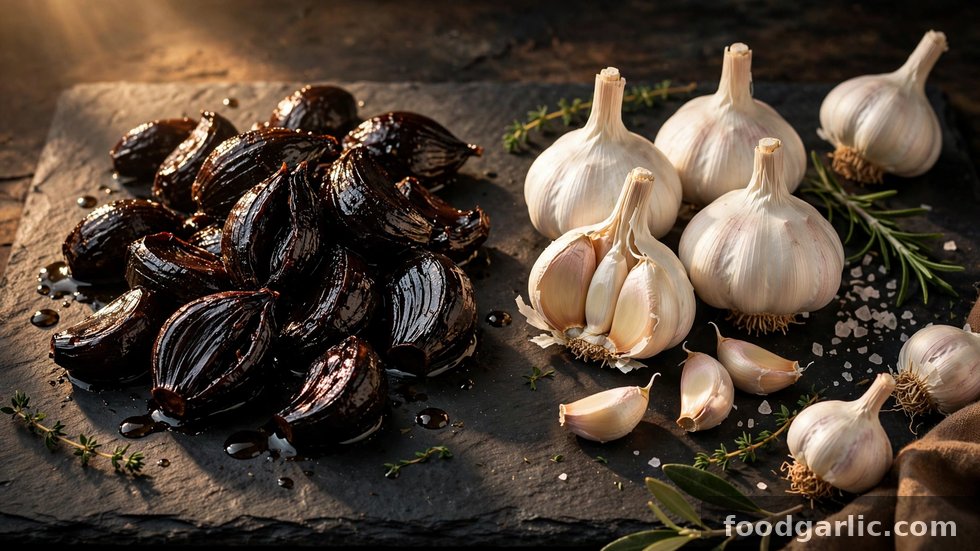
Black garlic looks like something from a different world — glossy black cloves with a flavor closer to balsamic-soaked prunes than to the sharp bite of fresh garlic. But is it healthier than regular white garlic, or just trendier?
In this guide, you will learn what black garlic actually is, how it compares to white garlic nutritionally, how the taste differs, and the best ways to use each one in your cooking.
- What Is Black Garlic?
- Nutritional Comparison
- Health Benefits Compared
- Taste and Flavor Differences
- How to Use Black Garlic
- How to Use White Garlic
- Frequently Asked Questions
What Is Black Garlic?
Black garlic is not a different plant. It is regular garlic — typically hardneck varieties — that has been aged for weeks under controlled heat (about 60–80°C) and high humidity, a process similar to a long, gentle caramelization called the Maillard reaction.
Over 2–4 weeks, the cloves turn black, soften to a jelly-like texture, and lose their pungent bite. The sugars and amino acids in the garlic react to create entirely new compounds, including S-allyl cysteine and melanoidins — the same family of antioxidants found in roasted coffee and dark beer.
It originated in Korea and Japan, where it was sold as a health food before chefs discovered its culinary potential. Today you can buy it in specialty stores or make it at home with a rice cooker or slow cooker set on “warm.”
Nutritional Comparison
Pound for pound, black garlic and white garlic start from the same place but diverge during fermentation.
- Antioxidants: black garlic contains roughly twice the antioxidant activity of fresh garlic, thanks to the Maillard compounds formed during aging.
- S-allyl cysteine: levels rise significantly during fermentation. This stable compound is linked in studies to cardiovascular and immune support.
- Allicin: fresh white garlic wins here. Allicin forms when raw garlic is crushed, and much of it converts or degrades during the aging process.
- Calories and sugar: black garlic is slightly higher in both, since the aging concentrates sugars — still negligible in normal serving sizes.
- Vitamins: both retain vitamin C, B6, and manganese, though heat degrades some vitamin C in black garlic.
In short: black garlic leads on antioxidants, white garlic leads on allicin. Neither is “empty” — they simply emphasize different compounds.
Health Benefits Compared
The research on black garlic is younger than on white garlic, but early studies are encouraging. Animal and cell studies suggest black garlic may help support healthy cholesterol levels, liver function, and immune response — largely attributed to its higher antioxidant content.
White garlic, meanwhile, has the deeper evidence base: decades of human trials behind its modest effects on blood pressure and possibly cholesterol, driven by allicin and its derivatives.
One practical advantage of black garlic: it is far gentler on the stomach and causes less odor and reflux than raw garlic. People who cannot tolerate raw garlic often do fine with black garlic — though it is not a medical treatment for anything on its own.
The honest bottom line: both are healthy foods, and the differences are a matter of emphasis, not a winner and a loser. Eating either regularly as part of a balanced diet is what matters.
Taste and Flavor Differences
This is where the two truly part ways. White garlic is pungent, sharp, and spicy — the flavor that bites back. Its intensity varies with preparation: raw is fiery, roasted is sweet and mellow.
Black garlic is sweet, savory, and complex: notes of molasses, balsamic vinegar, tamarind, and dark fruit, with an umami depth and zero harshness. The texture is soft and almost spreadable, like a fruit paste.
Because black garlic is already sweet, it shines in dishes where you want depth without heat — and it pairs beautifully with chocolate, cheese, and cured meats, combinations where raw garlic would be unthinkable.
How to Use Black Garlic
Black garlic needs no cooking — heat would only dull its nuanced flavor. Treat it like a finishing ingredient.
- Spread it on toasted bread or crackers with soft cheese.
- Mash it into mayonnaise, butter, or aioli for an instant upgrade.
- Slice it over salads, grain bowls, or roasted vegetables.
- Blend it into vinaigrettes, where it dissolves into a rich, dark dressing.
- Pair it with dark chocolate desserts, blue cheese, or charcuterie for a surprising contrast.
A little goes a long way: 1–2 cloves per serving is plenty. Store black garlic in an airtight container in a cool, dark place; it keeps for months, and many people refrigerate it for extra longevity.
How to Use White Garlic
White garlic is the workhorse — the allium you reach for in 95% of cooking. Its versatility comes from how dramatically preparation changes its character.
- Raw and crushed: maximum pungency and allicin — ideal for dressings, dips, and pesto.
- Sautéed gently: aromatic and mellow — the base of countless sauces, stir-fries, and soups.
- Roasted whole: sweet, creamy, and spreadable — perfect on bread or blended into mashed potatoes.
- Pickled: tangy and crunchy — a great condiment for rich dishes.
For the most allicin, crush and rest the garlic for 10 minutes before cooking. For the mildest flavor, roast or simmer it whole — the longer the heat, the sweeter it gets.
Frequently Asked Questions
Is black garlic healthier than white garlic?
Black garlic has about twice the antioxidant activity of fresh garlic, while white garlic has more allicin and a deeper evidence base for blood pressure. Both are healthy; they simply emphasize different compounds. Neither is a clear overall winner.
Can I make black garlic at home?
Yes. Place whole unpeeled heads in a rice cooker or slow cooker on the “warm” setting (around 60–70°C), wrap them loosely in foil, and leave them for 2–4 weeks. Check periodically — they are done when the cloves are black, soft, and sweet.
Does black garlic taste like regular garlic?
No — it tastes sweet and savory with notes of molasses, balsamic, and dark fruit, with none of raw garlic’s sharpness. The texture is soft and jelly-like.
How long does black garlic last?
Stored in an airtight container in a cool, dark place, black garlic keeps for several months. Refrigeration extends its life further. Discard it if it develops off smells or mold.
1 thought on “Black Garlic vs White Garlic: Health Benefits and Taste Difference”