
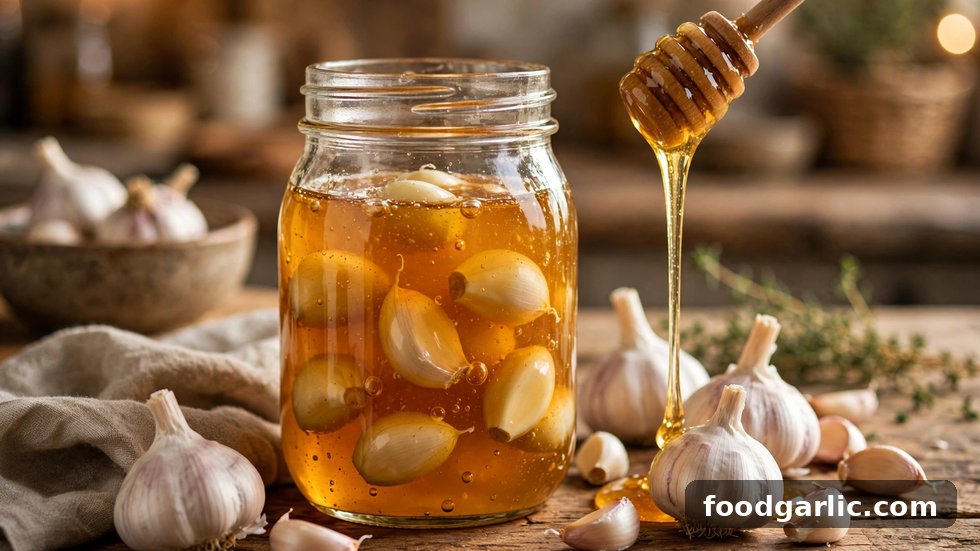
Every winter, the same folk remedy resurfaces: garlic cloves slowly fermenting in a jar of raw honey, promising immune support by the spoonful. But is honey garlic just a tasty tradition, or does fermentation actually change anything?
In this guide, you will learn how to ferment garlic in raw honey step by step, why the fermentation matters, how to use the finished remedy safely, and the critical safety rules — including the botulism risk you must not ignore. You will end up with a golden, mellow jar ready in about a month.
Table of Contents
- Why Honey and Garlic Work Well Together
- What You Need to Get Started
- How to Ferment Garlic in Raw Honey (Step by Step)
- Signs Your Ferment Is Ready (and Safe)
- How to Use Honey Garlic Remedy
- Critical Safety Rules: Botulism and More
- Frequently Asked Questions
Why Honey and Garlic Work Well Together
Garlic and honey are both traditional remedies with modern research behind them. Garlic’s allicin and sulfur compounds have shown antimicrobial and immune-supporting properties in lab studies. Raw honey brings its own antibacterial activity (partly from hydrogen peroxide produced by bee enzymes) plus soothing, cough-calming qualities.
Fermentation adds a third dimension. Over several weeks, the garlic’s moisture thins the honey enough for beneficial fermentation to begin. The result: harsh raw garlic mellows dramatically, becoming sweet, spreadable, and far easier to take daily — while the honey absorbs garlic’s bioactive compounds.
Keep expectations honest: this is a traditional wellness tonic, not a proven medicine. It may soothe a sore throat, but it will not cure infections or replace medical care.
What You Need to Get Started
- Raw, unpasteurized honey — pasteurized honey lacks the live enzymes and microbes that drive fermentation. Use enough to fully cover the garlic.
- Fresh garlic: 1–2 heads, peeled. Firm, fresh cloves ferment best; avoid sprouted or soft ones.
- A clean glass jar with a lid — a pint (500 ml) mason jar is ideal.
- Patience: garlic floats, so you will need to flip or stir the jar regularly.
No starter culture or special equipment needed — the wild microbes on the garlic and in raw honey do the work.
How to Ferment Garlic in Raw Honey (Step by Step)
- Step 1 — Prep the garlic: peel the cloves and lightly crush or prick each one with a fork. This releases juices that kick-start fermentation.
- Step 2 — Fill the jar: add garlic until the jar is about half to two-thirds full. Do not pack it to the brim.
- Step 3 — Cover with honey: pour raw honey over the garlic until every clove is fully submerged, leaving about 2 cm (1 inch) of headspace.
- Step 4 — Seal loosely: close the lid but not airtight, or use a fermentation lid. Burp the jar daily for the first 1–2 weeks to release CO2.
- Step 5 — Flip or stir: since garlic floats, turn the jar upside down (or stir with a clean spoon) once a day so all cloves stay coated.
- Step 6 — Wait: keep the jar at room temperature, out of direct sunlight, for at least 3–4 weeks — 1–3 months gives deeper flavor.
Bubbles forming in the first week or two are a good sign of active fermentation. The honey thins as garlic releases moisture, and after a month the cloves turn deep amber and taste sweet and mellow.
Signs Your Ferment Is Ready (and Safe)
- Bubbles then calm: active fizzing in weeks 1–2, slowing down by week 3–4.
- Thinner honey: the honey becomes noticeably runnier.
- Darkened cloves: garlic turns translucent amber-brown.
- Mellow taste: a clove should taste sweet and mild, not sharply raw.
- Smell check: it should smell like sweet garlic honey — discard immediately if it smells rotten, putrid, or like nail polish remover.
Green or blue garlic is normal and harmless. Mold is not: any fuzzy growth means the batch must be thrown out.
How to Use Honey Garlic Remedy
- Daily tonic: take 1 teaspoon to 1 tablespoon of the honey daily during cold season.
- Sore throat soother: stir a spoonful into warm (not hot) tea — heat above 40°C/104°F destroys raw honey’s enzymes.
- Eat the cloves: the fermented cloves are delicious on toast, in dressings, or minced into marinades.
- Cooking: drizzle the infused honey over roasted vegetables, cheese, or pizza.
Start small to check your tolerance — fermented cloves are gentler than raw garlic but still potent.
Critical Safety Rules: Botulism and More
This is the section to read twice. Garlic in an oxygen-free, low-acid environment (like honey or oil) can theoretically allow Clostridium botulinum spores to grow — the bacteria that cause botulism. The risk with honey garlic is considered low, but it is not zero.
- Never give honey (including honey garlic) to children under 12 months — infant botulism is a real and serious risk.
- Keep garlic submerged at all times; exposed cloves are where problems start.
- Use clean equipment — wash the jar in hot soapy water or sterilize it before use.
- Refrigerate after the first month if you want extra safety margin; fermentation continues slowly in the fridge.
- When in doubt, throw it out: off smells, mold, or slimy texture mean the batch is done — discard it.
- Acidify for extra safety: some fermenters add a tablespoon of apple cider vinegar per cup of honey to lower pH further.
If you are pregnant, immunocompromised, or managing a medical condition, check with your doctor before regular use.
Frequently Asked Questions
How long does fermented honey garlic last?
Honey garlic keeps for 6–12 months at room temperature or in the fridge. Discard it if you ever see mold or smell anything rotten.
Can I use pasteurized honey instead of raw honey?
You can, but raw honey works better — its live enzymes and natural microbes drive the fermentation. Pasteurized honey will still infuse with garlic flavor, but true fermentation will be weak or absent.
Why did my garlic turn green or blue?
Completely normal. Garlic’s sulfur compounds react with acids and trace minerals to form harmless blue-green pigments. It looks strange but is safe to eat.
Can kids take honey garlic remedy?
Never for babies under 12 months due to botulism risk from honey. For older children, a small amount is generally considered safe, but check with your pediatrician first — especially for regular use.