
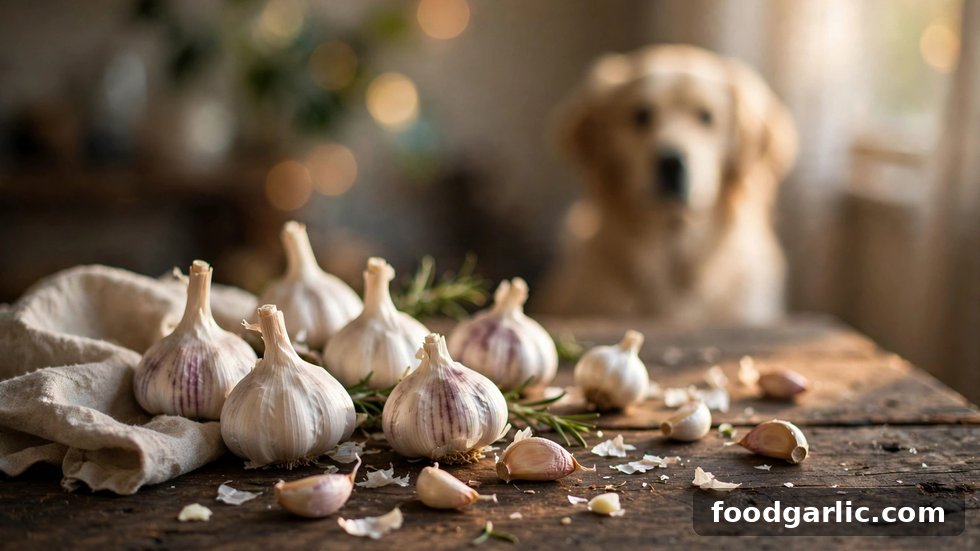
Garlic bread smells wonderful to us, but it can be genuinely dangerous for dogs. Garlic belongs to the onion family, and every part of it — raw or cooked — contains compounds that can damage a dog’s red blood cells. A stolen bite is rarely an emergency, but larger amounts are a real poisoning risk.
This article explains how garlic harms dogs, how much is considered toxic, the warning signs to watch for, what to do if your dog eats garlic, and the myths that confuse well-meaning pet owners.
Table of Contents
- Why Garlic Is Toxic to Dogs
- How Much Garlic Is Dangerous for a Dog?
- Symptoms of Garlic Poisoning in Dogs
- What to Do If Your Dog Eats Garlic
- Common Garlic Myths for Dogs
- Frequently Asked Questions
Why Garlic Is Toxic to Dogs
Garlic contains thiosulfates, sulfur compounds that dogs cannot metabolize safely. These oxidize hemoglobin in red blood cells, causing them to rupture — a condition called hemolytic anemia. With fewer healthy red blood cells, the body cannot carry enough oxygen.
This is the same mechanism that makes onions, leeks, and chives toxic — but garlic is roughly five times more potent than onions per gram. Every form is toxic: raw, cooked, powdered, dried, and garlic salt, because cooking does not destroy thiosulfates.
The tricky part is timing: symptoms often do not appear for 1 to 5 days. A dog can seem fine the day of the incident while red blood cell damage quietly progresses — which is why early veterinary contact matters even when the dog looks normal.
How Much Garlic Is Dangerous for a Dog?
Veterinary sources generally cite a toxic dose around 15 to 30 grams of garlic per kilogram of body weight — roughly one full head for a 10 kg dog, since one clove weighs 3 to 7 grams. But this is only a rough guideline, and sensitivity varies.
- Small dogs (under 10 kg): Even 1 to 2 cloves can be risky — small body weight means a small amount hits harder.
- Medium dogs (10 to 25 kg): Half a head or more is concerning; a single clove is unlikely to cause serious harm.
- Large dogs (over 25 kg): Usually need a full head or several cloves to reach toxic levels.
- Repeated small doses: Danger builds up — garlic given daily as a “remedy” can cause cumulative damage.
Japanese breeds like Shiba Inus and Akitas are more sensitive due to a genetic trait affecting red blood cells, as are puppies, elderly dogs, and dogs with existing conditions. When in doubt, treat any amount as worth a phone call to your vet.
Symptoms of Garlic Poisoning in Dogs
Because red blood cell damage takes time, watch your dog closely for several days after any garlic incident. Early digestive signs may appear within hours; blood-related signs typically appear in 1 to 5 days.
- Vomiting and diarrhea — often first, within 6 to 24 hours
- Loss of appetite, abdominal pain, lethargy, weakness
- Pale or yellowish gums — a sign of anemia
- Rapid breathing or elevated heart rate
- Dark or reddish-brown urine — hemoglobin in the urine, a serious sign
- Collapse in severe cases
Pale gums and dark urine are emergency signs — get to a vet immediately.
What to Do If Your Dog Eats Garlic
Act Quickly, Then Call Your Vet
If the garlic was eaten within the last 1 to 2 hours, a vet may be able to induce vomiting to remove it — do not try this at home without veterinary guidance. When you call, have ready: your dog’s weight, how much garlic and in what form, and when it happened.
Monitor for Days, Not Hours
Even if the amount was small, watch your dog for at least 5 days and check gum color daily — press a finger on the gum; pink should return within 2 seconds. Vet treatment may include activated charcoal, IV fluids, oxygen therapy, or in severe cases a blood transfusion. With prompt treatment, most dogs recover fully.
Common Garlic Myths for Dogs
- “Garlic repels fleas safely.” There is no reliable evidence it works, and regular small doses can cause cumulative red blood cell damage. Use vet-approved flea prevention instead.
- “A little garlic boosts immunity.” That reputation comes from human studies. In dogs, the toxic risk outweighs any unproven benefit.
- “Cooking makes garlic safe.” False — heat does not break down the thiosulfates responsible for toxicity. Garlic powder, garlic butter, and roasted cloves are all toxic.
- “My dog ate garlic and was fine.” A large dog eating one clove will usually be fine — that does not make garlic safe. Size, dose, and sensitivity all matter.
Want to make your dog’s food more appealing safely? Try plain pumpkin puree, blueberries, parsley, carrots, or onion-free bone broth — and check labels on treats and table scraps, since garlic powder hides in many human foods.
Frequently Asked Questions
Can dogs eat garlic in small amounts?
No amount is considered safe by veterinary toxicologists. A single clove is unlikely to seriously harm a large dog, but garlic should never be fed deliberately — the risk of cumulative red blood cell damage makes even “small amounts” a bad idea.
My dog ate a piece of garlic bread. Should I panic?
Do not panic, but do act: note how much was eaten and your dog’s weight, then call your vet. One small bite is rarely dangerous for a medium or large dog, but your vet can confirm based on dose and size.
How long after eating garlic do symptoms appear in dogs?
Digestive upset may appear within 6 to 24 hours, but the dangerous blood-related symptoms (pale gums, lethargy, dark urine) typically take 1 to 5 days — which is why veterinary follow-up matters even when the dog seems fine at first.
Is garlic powder as toxic as fresh garlic for dogs?
Yes — garlic powder is more concentrated than fresh, so a teaspoon delivers more toxic compounds than a fresh clove. Cooked, powdered, and fresh garlic are all dangerous to dogs.