
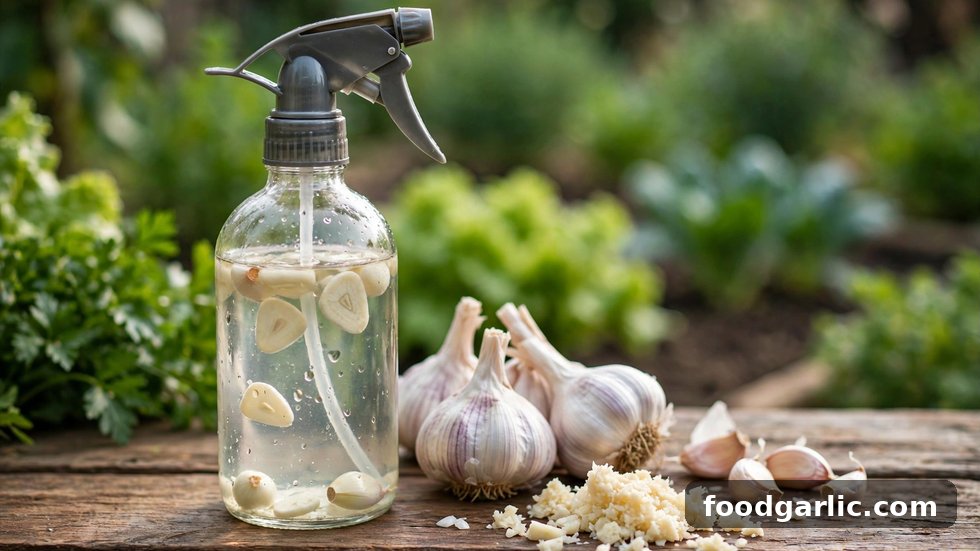
Aphids swarming your roses? Cabbage worms chewing through your kale? Before you reach for a synthetic pesticide, look in your kitchen — a humble head of garlic might be the most effective organic pest control you already own.
In this guide, you will learn how to make garlic water spray at home, which garden pests it repels, the right way to apply it without harming plants, and the common mistakes that make homemade garlic spray fail.
Table of Contents
- Why Garlic Water Works Against Pests
- How to Make Garlic Water Spray (Step by Step)
- Which Pests Does Garlic Water Repel?
- How to Apply It Safely in Your Garden
- Limitations: What Garlic Water Cannot Do
- Common Mistakes That Ruin Your Garlic Spray
- Frequently Asked Questions
Why Garlic Water Works Against Pests
Garlic’s pest-repelling power comes from its sulfur compounds, mainly allicin — the same chemical released when you crush a clove for cooking. Unlike synthetic pesticides that kill on contact, garlic water works as a repellent: pests rely on smell to find food and lay eggs, and garlic-coated plants simply do not register as dinner.
How Garlic Protects Plants
- Contact repellence: soft-bodied insects dislike crawling through garlic residue on leaves.
- Odor masking: the strong sulfur scent confuses pests that locate host plants by smell, such as cabbage moths and aphids.
How to Make Garlic Water Spray (Step by Step)
The recipe is simple, but the details matter: a quick soak for light infestations, and a stronger boiled concentrate for stubborn pests.
Quick Garlic Soak Spray
- You need: 4–5 garlic cloves, 1 quart (about 1 liter) of water, a spray bottle, and a strainer.
- Step 1: Crush the cloves with the flat side of a knife — crushing releases the active allicin.
- Step 2: Add the crushed garlic to the water and let it steep overnight (8–12 hours), then strain out the solids.
- Step 3: Pour the liquid into a spray bottle and add one drop of mild liquid soap (not detergent) to help it stick to leaves.
Strong Boiled Concentrate
- You need: 1 whole bulb of garlic, 2 cups of water, and a saucepan.
- Step 1: Separate and crush all cloves from one full bulb.
- Step 2: Simmer the garlic in 2 cups of water for 10–15 minutes, then cool completely.
- Step 3: Strain, then dilute 1 part concentrate with 3 parts water before spraying.
- Step 4: Add a drop of liquid soap per quart as a spreader-sticker.
The boiled concentrate is more potent and better for established infestations, while the overnight soak is gentler and ideal for regular preventive spraying. Homemade garlic spray stays fresh for about one week in the refrigerator.
Which Pests Does Garlic Water Repel?
Garlic water is most effective against soft-bodied and scent-driven insects. It works best as a preventive measure or at the first sign of trouble, not as a rescue treatment for a full-blown invasion.
- Aphids — one of the best-documented successes; garlic spray disrupts the colonies on roses, beans, and peppers.
- Spider mites — regular spraying can suppress small populations on indoor and greenhouse plants.
- Cabbage worms and moths — the odor confuses egg-laying moths on brassicas like cabbage and kale.
- Whiteflies — repelled from tomatoes, cucumbers, and ornamentals when sprayed consistently.
- Thrips — discouraged by garlic residue on flowers and vegetable leaves.
Garlic water repels rather than kills. Persistent caterpillars may still need hand-picking, and heavy infestations usually require additional organic controls like neem oil or insecticidal soap.
How to Apply It Safely in Your Garden
Even natural sprays can damage plants if misused. Garlic water is acidic and sulfur-rich, so concentration and timing are everything.
Application Rules
- Always patch-test first: spray a few leaves and wait 24 hours to check for burning or yellowing before treating the whole plant.
- Spray in the evening or early morning: wet leaves in hot midday sun can scorch, and evening spraying avoids harming foraging bees.
- Coat both sides of leaves: aphids hide underneath — spraying top and bottom doubles effectiveness.
- Reapply every 5–7 days and after rain, since the garlic residue washes off easily.
- Target the hotspots: new growth tips for aphids, leaf undersides for whiteflies, soil lines for slugs.
Protecting Beneficial Insects
Ladybugs, lacewings, and parasitic wasps are your garden’s best allies. To protect them, spot-spray only infested plants rather than blanketing the whole garden, and avoid flowering plants during bloom.
Limitations: What Garlic Water Cannot Do
Honesty is important with homemade remedies. Garlic water has real limits, and knowing them saves you from wasted effort.
- It will not cure plant diseases like blight or powdery mildew — at best it offers mild antifungal support.
- It does not kill hard-shelled insects such as Japanese beetles or stink bugs; it may only mildly annoy them.
- It washes off quickly in rain or with overhead watering, so frequent reapplication is mandatory.
- Results vary by pest pressure: against light infestations it shines; against a full army of caterpillars, you will need stronger measures.
Common Mistakes That Ruin Your Garlic Spray
- Using whole, uncrushed cloves: allicin only forms when garlic cells are broken — whole cloves soaked in water do almost nothing.
- Overdosing the concentration: pouring undiluted concentrate straight on plants causes leaf burn, especially on tender seedlings and herbs.
- Adding dish soap instead of pure soap: detergents contain degreasers that strip the waxy cuticle off leaves — use pure liquid castile soap only.
- Spraying in direct sunlight: droplets act like tiny magnifying lenses and scorch foliage.
- Storing it for weeks: garlic water loses potency after about 7 days refrigerated — make fresh batches weekly.
Frequently Asked Questions
Can I use garlic powder instead of fresh garlic cloves?
Fresh garlic works best because crushing releases allicin, the key active compound. Garlic powder contains far less allicin and dissolves poorly. If it is all you have, use 2 teaspoons of powder per quart of water, but expect milder results.
Is garlic water spray safe for vegetables and herbs I will eat?
Yes — it is one of the safest options for edible gardens. Simply wash your harvest thoroughly before eating, and stop spraying about a week before harvest to let residues fade.
Will garlic water kill earthworms or harm my soil?
At normal spray dilutions, garlic water is unlikely to harm earthworms or soil microbes. Avoid drenching soil with concentrate — the spray is meant for foliage, not the root zone.