
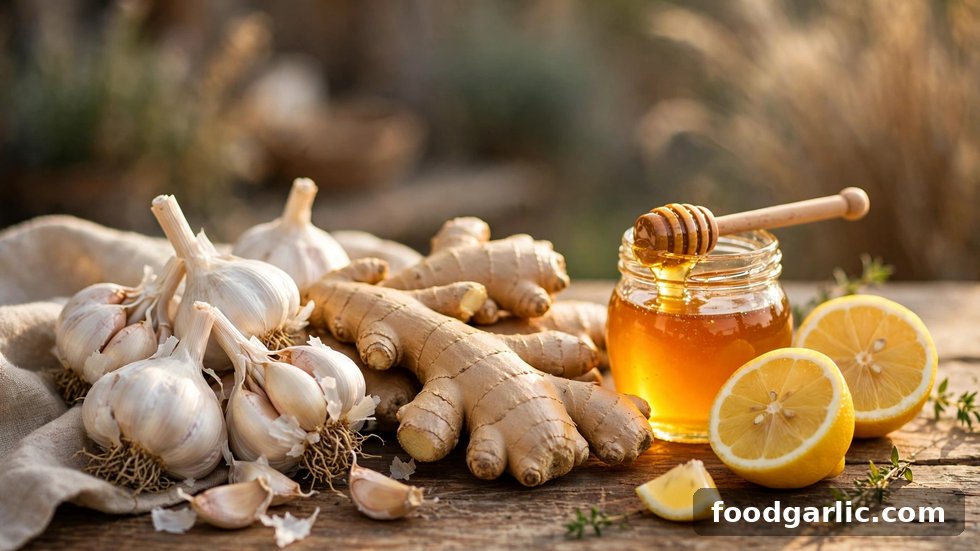
Garlic and ginger are two of the oldest ingredients in traditional kitchens — and when combined, they create a flavor base that appears in cuisines from India to China to the Caribbean. Beyond taste, both are packed with bioactive compounds that researchers have studied for decades.
This guide covers what science actually says about the garlic-ginger combo, the key compounds behind their reputation, and practical recipes — from a soothing tea to a punchy stir-fry paste — that put them to work in your kitchen.
Table of Contents
- Why Garlic and Ginger Work So Well Together
- The Key Compounds: Allicin and Gingerol
- Health Benefits Researchers Have Studied
- Soothing Garlic-Ginger Tea Recipe
- All-Purpose Garlic-Ginger Paste for Cooking
- Safety, Dosage, and Side Effects
- Frequently Asked Questions
Why Garlic and Ginger Work So Well Together
In the kitchen, garlic brings pungent, savory depth while ginger adds warm, citrusy heat. Together they form the aromatic foundation of countless dishes — Indian curries, Chinese stir-fries, Caribbean green seasoning. There is a practical reason: ginger’s brightness balances garlic’s heaviness, and garlic’s mellow sweetness when cooked rounds out ginger’s sharp bite. Nutritionally they complement each other too — garlic’s sulfur compounds and ginger’s phenolic compounds are entirely different chemical families, giving you a broader range of plant compounds than either alone.
The Key Compounds: Allicin and Gingerol
Allicin (Garlic)
When garlic is crushed or chopped, the enzyme alliinase converts alliin into allicin — the compound behind garlic’s sharp smell and much of its studied activity. Allicin breaks down within hours, which is why freshly crushed garlic matters more than garlic pre-minced days ago.
Gingerol (Ginger)
Fresh ginger’s heat comes from gingerols; when heated or dried, they convert to shogaols, which are even more pungent — why dried ginger tastes hotter and sweeter than fresh. Practical takeaway: crush garlic and rest it 10 minutes before cooking, and use fresh ginger when you want gingerol’s full profile.
Health Benefits Researchers Have Studied
Both ingredients have genuine research behind them — but honest framing matters, since most studies use concentrated extracts or large doses rather than weeknight-curry amounts. What the evidence suggests:
- Immune support: Studies suggest garlic may reduce cold frequency, and ginger has shown anti-inflammatory activity in lab and small human trials — supportive, not curative.
- Heart health: Garlic has the stronger evidence — trials suggest aged garlic extract may modestly lower blood pressure and support healthy cholesterol. Ginger’s evidence is less robust.
- Digestive comfort: Ginger is one of the best-studied natural options for nausea; garlic’s prebiotic fibers may support gut bacteria, though raw garlic can irritate sensitive stomachs.
- Antioxidant activity: Both are rich in antioxidants in laboratory studies — plausible but unproven at culinary doses.
The bottom line: garlic and ginger are nutritious foods with interesting research, not medicines. Enjoy them generously in cooking, but treat health claims with healthy skepticism.
Soothing Garlic-Ginger Tea Recipe
This warming tea is a classic comfort drink when you feel a cold coming on. It will not cure anything, but the steam, warmth, and ginger make it genuinely soothing.
- 2 cloves garlic, lightly crushed
- 1-inch piece fresh ginger, thinly sliced (about 15 g)
- 2 cups water
- 1 tablespoon honey — add after cooling slightly, to taste
- Half a lemon, juiced
Method: Simmer the garlic and ginger in water for 10 minutes — do not boil hard, or the flavor turns harsh. Strain into a mug, cool 2 minutes, then stir in honey and lemon. Drink warm, up to 2 cups a day.
All-Purpose Garlic-Ginger Paste for Cooking
This is the backbone of Indian, Pakistani, and many Southeast Asian kitchens. Make a batch once, and weeknight cooking gets dramatically faster.
- 1 cup peeled garlic cloves (about 2 heads)
- 1 cup peeled fresh ginger, roughly chopped
- 2 tablespoons neutral oil (helps blending and preserves freshness)
- 1 teaspoon salt
Method: Blend into a smooth paste, adding a splash of water if needed. Store in a sterilized glass jar in the refrigerator for up to 2 weeks, or freeze in ice-cube trays for 3 months. Use 1 tablespoon per dish as your starting aromatic — bloom it in hot oil for 1 to 2 minutes first. Food safety note: never store garlic paste in oil at room temperature — low-acid, oxygen-free environments can allow botulism bacteria to grow.
Safety, Dosage, and Side Effects
As foods, garlic and ginger are safe for most people in culinary amounts. Issues arise mainly with large or concentrated doses:
- Stomach irritation: Raw garlic on an empty stomach can cause heartburn or nausea; large amounts of ginger can too. Cooked forms are gentler.
- Blood thinning: Both may have mild anti-clotting effects — talk to your doctor before using concentrated supplements if you take blood thinners or have surgery scheduled.
- Pregnancy: Culinary amounts are fine, but medicinal-dose supplements should be discussed with a healthcare provider.
A sensible daily culinary target: 1 to 2 cloves of garlic and a thumb-sized piece of ginger — plenty for flavor and plant compounds without side effects.
Frequently Asked Questions
Can I eat raw garlic and ginger together every day?
Yes, in culinary amounts — roughly 1 to 2 cloves of garlic and a small piece of ginger. Raw garlic on an empty stomach may cause heartburn in some people, so having it with food or lightly cooked is gentler.
Does garlic-ginger tea cure colds?
No tea cures a cold. Garlic-ginger tea may be soothing — the warmth, steam, and ginger can ease throat discomfort and congestion — and both ingredients have some immune-related research behind them. Think comfort, not cure.
Is fresh ginger better than ginger powder for health benefits?
They contain different compounds: fresh ginger is rich in gingerols, while dried ginger converts them to shogaols. Both have studied activity, so neither is strictly “better” — fresh ginger offers more gingerol, which most tea and remedy recipes target.
How long does homemade garlic-ginger paste last?
About 2 weeks in a sterilized jar in the refrigerator, or 3 months frozen in portions. Always keep it refrigerated — garlic in oil at room temperature creates a botulism risk.
1 thought on “Garlic and Ginger Power Combo: Health Benefits and Recipes”