
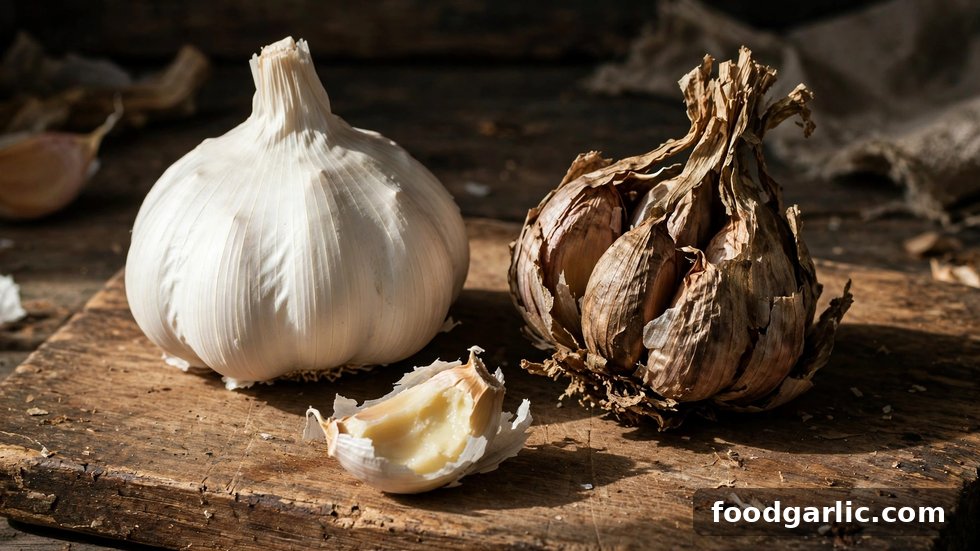
Nobody wants to bite into a dish and discover the garlic was rotten. Bad garlic does not just taste off — moldy cloves can carry mycotoxins, and a shriveled head will ruin a recipe’s flavor. The good news: spotting bad garlic takes about five seconds once you know the signs.
In this guide you will learn the visual, touch, and smell tests for fresh garlic, how to tell mold from harmless sprouting, which “bad” garlic is actually still usable, and the storage habits that keep your garlic fresh for months.
Table of Contents
- What Fresh Garlic Looks, Feels, and Smells Like
- 7 Signs Your Garlic Has Gone Bad
- Moldy Garlic vs Sprouted Garlic: How to Tell
- When “Old” Garlic Is Still Safe to Use
- How Long Garlic Lasts (Whole, Peeled, Minced)
- Storage Tips to Keep Garlic Fresh Longer
- Frequently Asked Questions
What Fresh Garlic Looks, Feels, and Smells Like
A fresh head of garlic feels firm and heavy for its size, with tight, dry, papery skins. Individual cloves should be plump and solid — no give when pressed — and the cut end should look clean and pale. An unpeeled head should smell like almost nothing; the sharp pungency only appears when you break a clove open.
7 Signs Your Garlic Has Gone Bad
- Soft or mushy cloves: If cloves dent or squish when pressed, they are breaking down inside. Slightly soft cloves can still be cooked; mushy ones go in the bin.
- Visible mold: Blue, green, black, or white fuzzy patches on skins, between cloves, or on the root end. Garlic mold can produce mycotoxins that spread deeper than the visible spot — discard the whole head.
- Brown or dark spots: Peeled cloves should be creamy white to pale yellow. A single small spot can be cut away; widespread browning means the clove is done.
- Sour or off smell: Fresh garlic smells sharp and clean. A sour, musty, or fermented smell means microbes have moved in — trust your nose.
- Shriveled, dried-out cloves: Wrinkled, raisin-like cloves are safe but nearly flavorless. Fine for stock; replace them for real cooking.
- Translucent, yellowed cloves: A sign of fermenting or breakdown — often bitter or oddly sweet. Discard.
- Slimy texture: A slimy film on peeled or jarred garlic means bacterial activity. Throw it away; do not rinse and reuse.
Moldy Garlic vs Sprouted Garlic: How to Tell
This is the most common confusion, and getting it wrong wastes good garlic. Here is the difference:
- Sprouting: A green shoot growing from the center of the clove, sometimes pushing through the top. The shoot is firm, green, and clearly plant-like. Sprouted garlic is safe to eat — though the green center can taste bitter, so chefs often remove it.
- Mold: Fuzzy, powdery, or slimy patches in blue, green, black, or gray, usually on the outside skins, between cloves, or around the root plate. Mold looks dusty or furry, never like a clean plant shoot. Moldy garlic should be discarded.
The simple rule: green shoot = plant it or eat it; fuzzy patch = bin it. If unsure, cut the clove open — a clean sprout runs straight through the center, while mold shows as discoloration spreading through the flesh.
When “Old” Garlic Is Still Safe to Use
Not every imperfection means the trash. Slightly soft but not mushy cloves are safe to cook (roasting works well); sprouted garlic is safe (remove the green germ if bitter); mildly shriveled cloves are safe but weak (double the amount); and purple-streaked skins are normal for many varieties. If one clove in a head is bad, discard it and check the rest. But never try to salvage moldy garlic — unlike hard cheese, garlic is soft and porous, so mold threads run deeper than you can see.
How Long Garlic Lasts (Whole, Peeled, Minced)
- Whole unpeeled heads (room temperature): 3 to 6 months in a cool, dark, ventilated spot
- Whole unpeeled heads (refrigerator): Not recommended — cold and humidity trigger sprouting and mold
- Single unpeeled cloves: 1 to 3 weeks once the head is broken
- Peeled cloves (refrigerator): About 1 week in an airtight container
- Minced or chopped (refrigerator): 1 to 2 days — flavor degrades fast
- Frozen (whole, peeled, or minced): 6 to 12 months
The single biggest enemy is moisture. Garlic stored in a sealed plastic bag at room temperature will mold within days, while the same garlic in a mesh bag in a dark cupboard lasts for months.
Storage Tips to Keep Garlic Fresh Longer
- Keep heads whole until you need cloves — breaking the head starts the clock.
- Store in a cool, dark, dry place with airflow: a mesh bag, basket, or paper bag in the pantry.
- Never refrigerate whole heads — cold tricks garlic into sprouting.
- Keep garlic away from stove heat and sink steam, which shorten its life dramatically.
- Buy firm, heavy heads with tight skins; light, loose heads are already aging.
If you buy in bulk, check your stock every couple of weeks and use the softest heads first. One rotting head can spread moisture and mold to its neighbors.
Frequently Asked Questions
Can you eat garlic that has mold on it if you cut the mold off?
No. Garlic is soft and porous, so mold penetrates deeper than the visible spot, and some garlic molds produce mycotoxins. If you see mold anywhere on a head, discard the whole head — do not try to salvage it.
Is sprouted garlic safe to eat?
Yes. A green sprout is just the garlic trying to grow, not a sign of spoilage. It is completely safe, though the green germ can taste slightly bitter — many cooks simply slice it out before using the clove.
Why does my garlic smell sour?
A sour or fermented smell means the garlic is breaking down, usually from moisture exposure or age. Fresh garlic should smell sharp and pungent. Sour-smelling garlic should be thrown away.
Can old garlic make you sick?
Old, dried-out garlic is usually just flavorless, not dangerous. The real risks are moldy garlic (possible mycotoxins) and garlic stored improperly in oil at room temperature (possible botulism). When in doubt, throw it out.
1 thought on “How to Tell If Garlic Has Gone Bad or Moldy”