
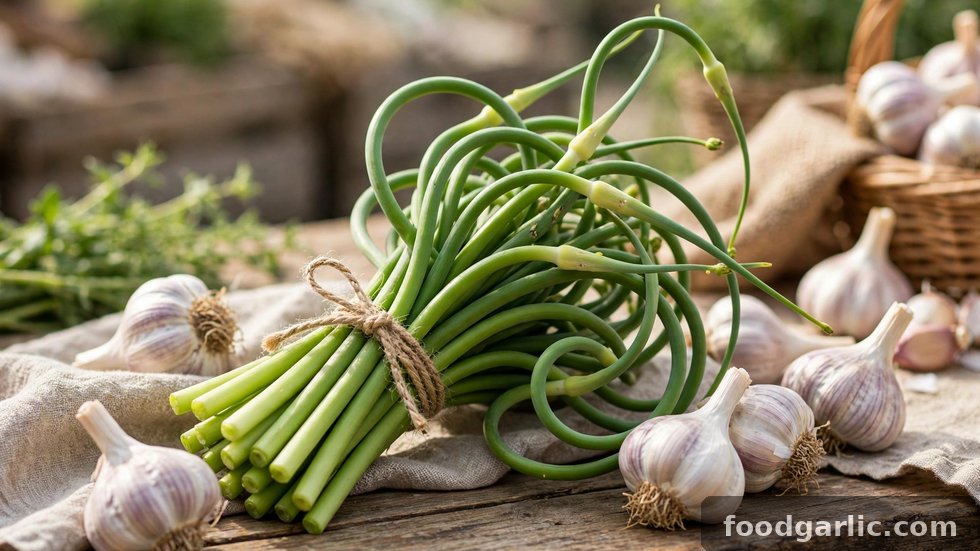
If you grow hardneck garlic, you will meet the scape: a curly green stalk that spirals up from the plant in late spring. Many gardeners snap them off and toss them — which is a shame, because garlic scapes are one of the season’s most delicious and versatile vegetables.
This guide explains what garlic scapes are, why removing them helps your garlic bulbs, and the best ways to cook them — from simple sautés to pesto and pickles.
- What Are Garlic Scapes?
- Why Remove the Scapes?
- When and How to Harvest
- What Do Scapes Taste Like?
- How to Cook Garlic Scapes
- Storing and Preserving
- Frequently Asked Questions
What Are Garlic Scapes?
Garlic scapes are the flower stalks of hardneck garlic plants. Left alone, a scape would uncurl, form a flower head, and produce tiny bulbils (miniature garlic cloves). Only hardneck varieties produce them — softneck garlic does not.
They emerge in late spring to early summer, curling into one or two elegant loops before straightening. The whole stalk is edible: tender at the curl, woodier near the base where it meets the plant.
Because they appear for only a few weeks each year, scapes are a seasonal delicacy — prized at farmers’ markets and a highlight of the garlic grower’s calendar.
Why Remove the Scapes?
Snapping off the scapes is not just harvesting a bonus crop — it improves your garlic harvest. The plant puts significant energy into flowering; removing the scape redirects that energy into the bulb underground.
Studies and grower experience suggest bulbs grow noticeably larger when scapes are removed promptly. Leave one or two scapes on if you want to watch them straighten — a traditional signal that harvest time is approaching.
When and How to Harvest
Harvest scapes when they have formed one full curl but are still tender — usually when they are 20–30 cm long. Wait too long and they become tough and fibrous.
To harvest, simply snap or cut the stalk at the point where it emerges from the leaves. It should break cleanly; if it resists, use scissors or pruners. Harvest in the morning when the stalks are crisp.
Trim off the pointed tip and any woody base before cooking — the middle curled portion is the tender, flavorful part.
What Do Scapes Taste Like?
Garlic scapes taste like a milder, greener version of garlic — all the savory depth with a fresh, almost grassy brightness and none of the harsh bite. Raw, they are crisp and pungent; cooked, they turn sweet and tender.
The texture is part of the appeal: snappy like asparagus when quickly cooked, meltingly soft when braised. They absorb flavors beautifully while keeping their own character.
How to Cook Garlic Scapes
Scapes are forgiving and versatile. These are the preparations that show them off best:
Simple sauté
Cut into 5 cm pieces and sauté in olive oil or butter over medium heat for 5–7 minutes until tender with lightly charred edges. Finish with salt, lemon, and parmesan. This is the purest way to taste them.
Grilled scapes
Toss whole scapes in oil and salt, then grill over medium-high heat for 3–4 minutes, turning once. The char adds smokiness that pairs beautifully with their sweetness.
Scape pesto
Blitz raw scapes with parmesan, toasted nuts, olive oil, and lemon into a vivid green pesto. It is fresher and milder than basil pesto — spectacular on pasta, spread on sandwiches, or dolloped on grilled meat.
Pickled scapes
Pack scapes into jars with a vinegar brine (1:1 vinegar and water, salt, sugar, mustard seed, peppercorns) and refrigerate. They are ready in a week and keep for months — crunchy, tangy, and brilliant on charcuterie boards.
Stir-fries and frittatas
Chop scapes into stir-fries in place of garlic and scallions, or fold them into frittatas and scrambled eggs. They hold their texture and perfume the whole dish.
Storing and Preserving
- Fresh: scapes keep 2–3 weeks in the refrigerator in a loose bag — far longer than most greens.
- Frozen: chop and freeze raw on a tray, then bag. They keep 6 months and go straight into cooked dishes.
- Pesto: freeze scape pesto in ice-cube trays for instant portions all year.
- Pickled: refrigerator pickles last 3–4 months and make excellent gifts.
- Dehydrated: dry and grind into scape powder — a unique seasoning for popcorn, eggs, and roasted vegetables.
Frequently Asked Questions
Can you eat garlic scapes raw?
Yes. Raw scapes are crisp and pungent — good finely chopped in salads or blended into pesto. Cooking mellows them considerably, so choose raw for bite and cooked for sweetness.
Do softneck garlic plants produce scapes?
No. Only hardneck garlic varieties produce scapes. Softneck garlic, the type most common in supermarkets, grows no central stalk.
What happens if I don’t remove the scapes?
The plant will flower and form bulbils, and the underground bulb will be smaller. It is not harmful — you just get less garlic and miss out on the scapes as food.
Where can I buy garlic scapes?
Look at farmers’ markets in late spring and early summer, or ask garlic growers directly. They are rarely in supermarkets due to their short season — another reason to grow your own.
Garlic scapes are one of the best-kept secrets of the garlic world — a short-season delicacy that too many gardeners overlook. Now that you know what they are, when to harvest them, and how to cook them, you can turn what used to be garden waste into some of the most exciting dishes of early summer. Try them grilled with olive oil and sea salt first, then experiment with scape pesto, stir-fries, and pickles. If you grow hardneck garlic, mark your calendar for late spring and enjoy a bonus harvest weeks before the bulbs are ready. And if you spot scapes at a farmers market, grab a bunch — your taste buds will thank you.