
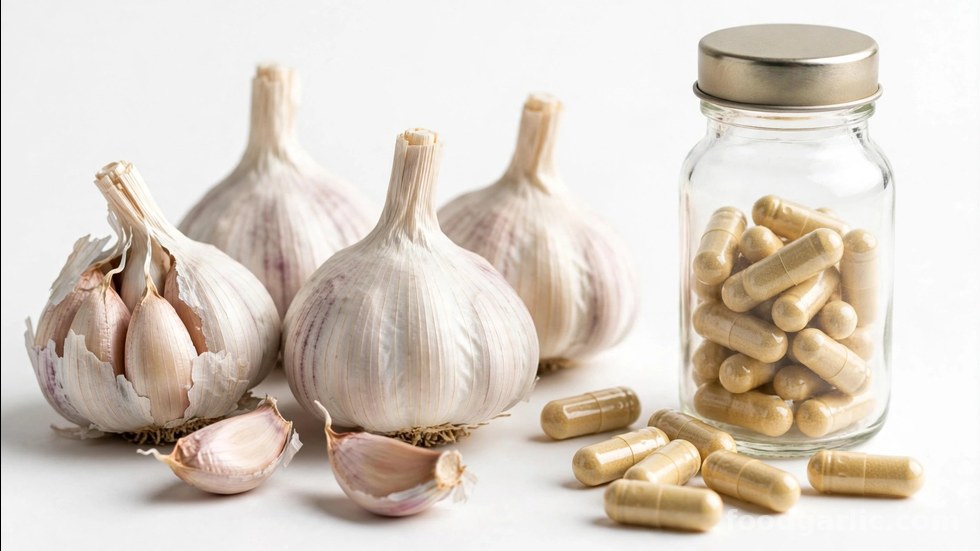
Table of Contents
- Why Garlic Form Matters
- Fresh and Raw Garlic: The Natural Benchmark
- Aged Garlic Extract: The Most Studied Supplement
- Garlic Oil Capsules: Concentrated and Convenient
- Garlic Powder Supplements: Hit or Miss
- Side-by-Side Comparison
- Which Should You Choose? Verdicts by Goal
- Safety and Side Effects
- FAQs
Why Garlic Form Matters
Most of garlic’s celebrated effects trace back to sulfur compounds, especially allicin. But allicin does not exist in an intact clove. It forms only when garlic is crushed, chopped, or chewed, as the enzyme alliinase converts the precursor alliin into allicin. How garlic is processed after crushing determines how much of this chemistry survives.
- Fresh/raw garlic: full allicin potential when crushed and rested before cooking
- Aged garlic extract (AGE): odorless, water-soluble compounds like S-allylcysteine (SAC) — standardized and gentle
- Garlic oil capsules: concentrated oil-soluble sulfur compounds, but allicin-free
- Garlic powder tablets: dehydrated garlic with variable allicin yield depending on manufacturing
Fresh and Raw Garlic: The Natural Benchmark
Nothing beats fresh garlic for raw allicin potential. One crushed medium clove yields roughly 2.5–6.5 mg of allicin — more than most single supplement doses. Research on fresh garlic shows broad antimicrobial activity, which is why studies of garlic’s antibacterial properties almost always start with the fresh clove. It is also the cheapest option.
The downsides are real, though. Allicin is fragile: heat destroys alliinase within minutes, so cooked garlic delivers far less active chemistry than raw. The crush-and-rest technique — crushing garlic and waiting 10 minutes before cooking — preserves significantly more beneficial compounds. Eating raw garlic daily can cause digestive discomfort; if you are sensitive, read our guide on raw garlic and stomach sensitivity first.
Best for
- People who cook daily and can add crushed garlic near the end of cooking
- Maximum allicin at the lowest cost
Aged Garlic Extract: The Most Studied Supplement
Aged garlic extract (AGE) is made by soaking sliced garlic in aqueous ethanol for up to 20 months. This long aging converts harsh, unstable compounds into stable, odorless ones — chiefly S-allylcysteine (SAC), standardized in quality products. AGE is the most researched garlic supplement in human trials, with studies supporting benefits for blood pressure, cholesterol, and immune function.
Because SAC is water-soluble and highly bioavailable, AGE delivers consistent dosing that fresh garlic cannot match — no breath odor, no stomach burn. The trade-off: it contains virtually no allicin, so benefits that specifically require allicin (like direct antimicrobial action on contact) are weaker. AGE is also the priciest option, typically several times the cost of plain garlic powder tablets.
Best for
- Long-term cardiovascular support with clinical-trial backing
- People who cannot tolerate raw garlic’s taste or digestive effects
- Standardized, odor-free dosing
Garlic Oil Capsules: Concentrated and Convenient
Garlic oil — steam-distilled essential oil or oil macerates — is sold in softgels and is extremely concentrated: many cloves go into a small amount of oil. These products are rich in oil-soluble sulfides like diallyl disulfide, which show antioxidant and antimicrobial activity in laboratory research.
However, human clinical evidence is thinner than for AGE or fresh garlic. Steam distillation destroys alliinase, so there is no allicin, and quality varies widely between brands. Convenient and odor-controlled, but better as a specialty supplement than a primary health strategy.
Best for
- Travelers wanting a compact, odor-free garlic option
- Supplementing — not replacing — a garlic-rich diet
Garlic Powder Supplements: Hit or Miss
Dehydrated garlic powder tablets are the budget supplement option, and in theory they can deliver allicin — but only if the alliinase enzyme survives manufacturing and the tablet dissolves properly in the gut. Many cheap products fail on both counts. Enteric-coated tablets standardized to allicin yield perform far better than uncoated, non-standardized ones.
A reputable, allicin-standardized powder tablet is a reasonable middle ground: real allicin potential at a low price. Always check the label for stated allicin potential, not just “garlic powder” weight.
Best for
- Budget buyers who want allicin without eating raw cloves
- Daily general wellness alongside dietary garlic
Side-by-Side Comparison
- Allicin content: Fresh garlic (highest) → standardized powder tablets (moderate, variable) → AGE (negligible) → garlic oil (none)
- Clinical evidence: AGE (strongest human trials) → fresh garlic (strong lab + traditional evidence) → powder tablets (moderate) → garlic oil (limited)
- Dosing consistency: AGE (best, standardized SAC) → powder tablets (varies by brand)
- Cost: Fresh garlic (cheapest) → powder tablets (low) → garlic oil (moderate) → AGE (highest)
- Convenience and odor: Supplements win — capsules are odor-free and portable
- Digestive gentleness: AGE (gentlest) → garlic oil → powder tablets → fresh raw garlic (harshest)
Garlic’s chemistry also transforms with fermentation — see our black garlic vs white garlic comparison for details.
Which Should You Choose? Verdicts by Goal
Goal: Heart and blood pressure support
Winner: Aged garlic extract. Strongest human clinical-trial record for cardiovascular markers, with standardized dosing and excellent tolerability.
Goal: Immune support and antimicrobial action
Winner: Fresh/raw garlic. Allicin-driven antimicrobial effects are strongest from freshly crushed cloves — use the crush-and-rest method.
Goal: General wellness on a budget
Winner: Fresh garlic in daily cooking + a standardized powder tablet. Dietary enjoyment plus consistent allicin potential at minimal cost.
Goal: Odor-free convenience
Winner: Aged garlic extract. Essentially odorless with the best evidence base.
Goal: Maximum potency regardless of taste
Winner: Fresh raw garlic. One to two crushed cloves daily, rested 10 minutes — if your stomach tolerates it.
Safety and Side Effects
Garlic in food amounts is safe for nearly everyone, but concentrated forms deserve respect. Common side effects include breath and body odor, heartburn, and digestive upset — most frequent with raw garlic and high-dose powder tablets. Garlic can thin the blood: anyone on anticoagulants or preparing for surgery should consult a doctor before using garlic supplements.
FAQs
Does cooking destroy garlic’s health benefits?
Heat inactivates alliinase and degrades allicin, so fully cooked garlic has less active chemistry than raw. Crushing garlic and resting it 10 minutes before cooking preserves more beneficial compounds.
How much fresh garlic equals one supplement capsule?
One medium fresh clove yields roughly 2.5–6.5 mg of allicin when crushed — often more than a single dose of a non-standardized supplement.
Can I take garlic supplements every day?
Yes — daily use is how most clinical trials are designed. Stick to the label dose, choose reputable brands, and check with your doctor if you take blood thinners or have upcoming surgery.
Is aged garlic extract better than fresh garlic?
For cardiovascular support with clinical evidence and no odor, AGE is better studied. For allicin-driven antimicrobial effects, fresh garlic wins. They work through different compounds, so many people use both.
Do garlic supplements cause bad breath?
Fresh garlic and some powder tablets can cause noticeable breath odor. Aged garlic extract and most garlic oil capsules are processed to be essentially odorless — a major reason people choose them.
1 thought on “Garlic vs Garlic Supplements: Which Delivers More Health Benefits?”