
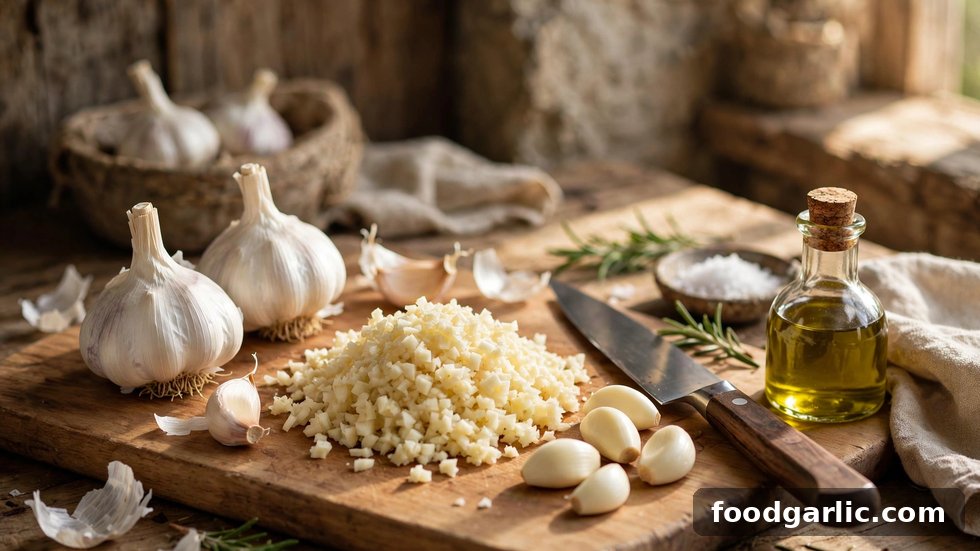
Fresh garlic is the backbone of great cooking — but only if you handle it right. Too much raw garlic overpowers, burnt garlic turns bitter, underused garlic leaves food flat. The difference between garlic that sings and garlic that ruins dinner comes down to a few fundamental techniques.
This beginner’s guide covers buying and storing fresh garlic, peeling, chopping, and cooking it perfectly — plus how raw, sautéed, and roasted garlic differ, and the mistakes every beginner should avoid.
Table of Contents
- Buying Fresh Garlic: What to Look For
- Storing Garlic the Right Way
- How to Peel Garlic (3 Easy Methods)
- Mincing, Slicing, and Crushing: When to Use Each
- Raw vs Sautéed vs Roasted: How Cooking Changes Garlic
- 7 Beginner Mistakes to Avoid
- Frequently Asked Questions
Buying Fresh Garlic: What to Look For
Great cooking starts at the store. A fresh head should feel firm, heavy, and solid, with tight, dry, papery skin — if cloves dent when squeezed, it is past its prime.
- Choose heavy heads with unbroken skins — light heads are dried out
- Avoid sprouting or moldy heads — check the root end for shoots, dark spots, or fuzz
- Hardneck vs softneck: Hardneck (stiff central stalk) tends toward bolder flavor; softneck (braided) is milder and stores longer
One head typically holds 10 to 12 cloves (about 40 g). Most recipes calling for “3 cloves” mean roughly 1 tablespoon minced.
Storing Garlic the Right Way
Store whole heads in a cool, dark, dry place with airflow — a pantry shelf in a mesh bag or basket is perfect. Properly stored, whole heads last 3 to 6 months.
- Do not refrigerate whole heads — cold triggers sprouting and mold
- Keep heads whole until you need cloves; breaking the head starts the freshness clock
- Keep away from heat and steam — not next to the stove or above the kettle
- Peeled cloves go in an airtight container in the fridge for up to a week
How to Peel Garlic (3 Easy Methods)
- Smash (fastest): Lay the flat of a chef’s knife over a clove and press firmly with your palm — the skin splits and slips off. Slightly crushes the clove, perfect for mincing.
- Shake (best for batches): Put cloves in a lidded jar and shake hard for 15 to 20 seconds. Ideal when a recipe needs a whole head.
- Microwave trick: Microwave unpeeled cloves 10 to 15 seconds — steam loosens the skins so they slide off. Do not overdo it.
Mincing, Slicing, and Crushing: When to Use Each
How you cut garlic changes its flavor intensity: more cell damage means more allicin, which means stronger, sharper taste. This is the single most useful thing a beginner can learn.
- Whole cloves — mildest; infuse gentle background flavor into roasts, braises, and confit
- Sliced — medium; toasty and nutty when fried, elegant in stir-fries
- Minced/chopped — strong; the everyday workhorse for sauces, marinades, and sautés
- Crushed/pressed — strongest; maximum pungency for dressings, aioli, and garlic bread
- Grated on a microplane — intense and paste-like; melts invisibly into dressings and sauces
The 10-minute rule: After crushing or mincing, let garlic rest 10 minutes before heating, giving the enzyme alliinase time to produce allicin. Garlic thrown straight into hot oil never develops its full potential.
Raw vs Sautéed vs Roasted: How Cooking Changes Garlic
Raw Garlic
Sharp, pungent, and fiery. Use raw in dressings, aioli, bruschetta, and finishing drizzles — anywhere you want a punch. A little goes a long way: start with half a clove and taste.
Sautéed Garlic
Mellow, savory, and aromatic. Cook minced garlic in oil over medium heat for 30 to 60 seconds until fragrant and just golden — the foundation of countless dishes. Golden is perfect; brown is bitter.
Roasted Garlic
Sweet, creamy, and caramelized. Cut the top off a whole head, drizzle with oil, wrap in foil, and roast at 200°C (400°F) for 35 to 40 minutes. The cloves turn soft and spreadable — incredible on bread or blended into sauces. Remember: heat tames garlic — the longer and hotter you cook it, the milder and sweeter it becomes.
7 Beginner Mistakes to Avoid
- Burning the garlic — the number one mistake. Brown garlic is bitter; cook on medium heat and pull it while golden.
- Adding garlic too early — in long-cooked dishes, add it in the last few minutes.
- Too much raw garlic — raw is far stronger than cooked; start with half a clove in dressings and dips.
- Skipping the rest time — wait 10 minutes after mincing so allicin can form before heating.
- Storing minced garlic for days — pre-minced garlic loses flavor fast; mince fresh each time.
- Walking away — garlic goes from perfect to burnt in under a minute; never leave sautéing garlic.
Frequently Asked Questions
How much garlic should a beginner use?
Start with 1 to 2 cloves per dish and adjust to taste. Cooked garlic is mellow, so be generous in sautés and roasts; raw garlic is intense, so start with half a clove in dressings and dips.
Why does my garlic taste bitter?
Bitterness almost always means the garlic browned or burnt. Garlic goes from golden to bitter in seconds over high heat. Cook it on medium heat, watch it constantly, and remove it while still pale gold. Old or sprouted garlic with a large green germ can also taste bitter.
Can I substitute garlic powder for fresh garlic?
In a pinch, yes: use 1/4 teaspoon of garlic powder per fresh clove. But the flavor is different — powder is one-dimensional compared to fresh. For dishes where garlic is the star (garlic bread, aioli, roasted garlic), fresh is irreplaceable.
How do I get rid of garlic smell on my hands?
Rub your hands on stainless steel under cold running water — the steel binds the sulfur compounds. Lemon juice, baking soda paste, or coffee grounds also work. Wearing gloves while mincing prevents the problem entirely.