
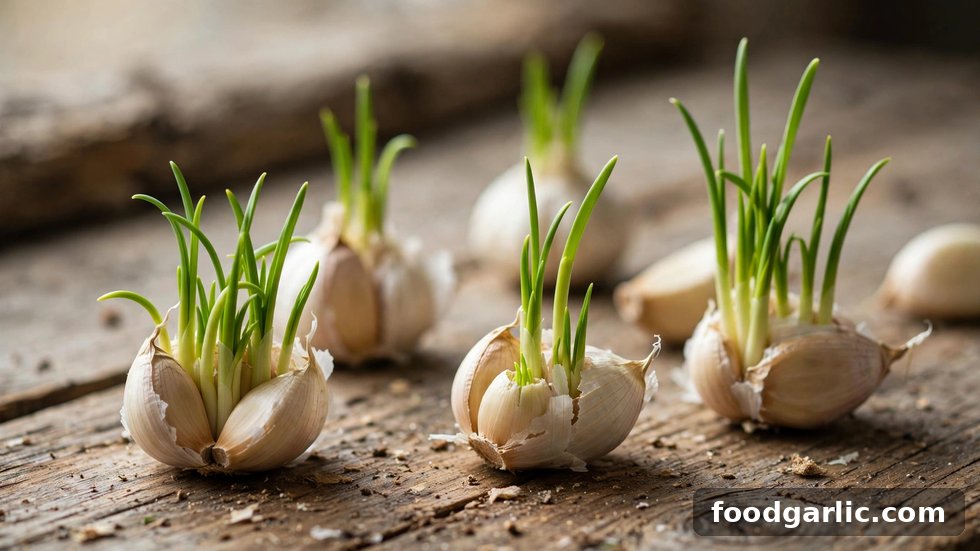
You break open a head of garlic and find a bright green shoot curling through the center of every clove. Most of us hesitate — is it still safe? Will it taste bitter? Should the whole head go in the bin? The short answer is reassuring: sprouted garlic is perfectly safe to eat.
In this article you will learn what sprouting actually means, whether sprouted garlic is safe and nutritious, how the taste changes, when to remove the green germ, and clever ways to use up sprouted garlic instead of wasting it.
Table of Contents
- What Sprouted Garlic Actually Is
- Is Sprouted Garlic Safe to Eat?
- Does Sprouted Garlic Taste Bitter?
- The Surprising Nutrition of Sprouted Garlic
- How to Use Sprouted Garlic in Cooking
- How to Prevent Garlic from Sprouting
- Frequently Asked Questions
What Sprouted Garlic Actually Is
A garlic clove is a living thing — it is a seed of sorts, designed to grow into a new plant. When stored in warm, humid, or bright conditions, the clove “wakes up” and sends a green shoot from its center. That shoot is simply the garlic trying to become a plant.
This is completely different from potato sprouting, which produces toxic solanine. Garlic sprouts contain no toxins at all. The green shoot is edible, nutritious, and used deliberately in some cuisines — Chinese cooking, for example, prizes garlic sprouts (suan miao) as a vegetable in their own right.
Sprouting is also not the same as molding. A clean green shoot growing from the center is sprouting; fuzzy blue, green, or black patches on the skins are mold, and moldy garlic should be discarded.
Is Sprouted Garlic Safe to Eat?
Yes — sprouted garlic is completely safe to eat, shoot and all. No food safety authority flags it, and there are no compounds in the sprout that harm humans. This is one of the most persistent kitchen myths, and it causes enormous food waste.
The confusion likely comes from potatoes, where green sprouts really are toxic. Garlic has no such chemistry. You can eat the clove, the shoot, or both with total confidence.
The only real “risk” is disappointment: as the clove feeds the growing shoot, it loses moisture and flavor. A heavily sprouted clove — one that is soft, shriveled, and mostly shoot — will taste weak. It is still safe, just not worth cooking with. Compost it or plant it.
Does Sprouted Garlic Taste Bitter?
Sometimes — but it is manageable. The green germ in the center can taste noticeably more bitter and harsh than the rest of the clove, especially raw. The fix: slice the clove in half lengthwise and pull out the green center with a knife tip. The remaining clove tastes essentially like normal garlic. For cooked dishes, you can usually skip this — heat mellows the bitter compounds, so sprouted garlic works fine in soups, stews, roasts, and stir-fries.
The Surprising Nutrition of Sprouted Garlic
Here is the twist: sprouted garlic may actually be more nutritious in some respects. A Korean study in the Journal of Agricultural and Food Chemistry found garlic sprouted for five days had significantly higher antioxidant activity than unsprouted garlic, as sprouting triggers the production of new phytochemicals not present in the original clove. The flavor still declines with age — but you should never throw sprouted garlic away for health reasons.
How to Use Sprouted Garlic in Cooking
Rather than wasting sprouted garlic, put it to work where its slightly milder flavor is an asset.
- Roast it whole: Roasting caramelizes the cloves and completely erases any bitter edge. Squeeze the soft cloves onto bread.
- Blend into soups and stews: Long cooking mellows everything — sprouted garlic disappears seamlessly into the background.
- Make garlic confit: Slow-poach peeled cloves in oil for silky, spreadable garlic with zero harshness.
- Eat the sprouts: If the shoots are a few inches long, snip them and use like chives or scallion greens — mild, fresh, and pretty as a garnish.
- Plant the cloves: The ultimate use. Push sprouted cloves root-end down into soil or a pot, and you will grow full new heads of garlic.
One place to avoid heavily sprouted garlic: raw dishes where garlic is the star, like pesto or garlic bread spread. The bitterness and weaker flavor will show. Use your freshest cloves there.
How to Prevent Garlic from Sprouting
- Store in a cool, dark, dry place — a pantry or cupboard around 15–18°C (60–65°F) is ideal.
- Never refrigerate whole heads — cold tricks garlic into thinking winter has passed, which triggers sprouting.
- Keep heads whole until needed; breaking the head exposes cloves to air and moisture.
- Ensure airflow — mesh bags, baskets, or paper bags beat sealed plastic every time.
- Buy what you will use within a few weeks; garlic is cheap, and fresher is always better.
If you consistently battle sprouting, you may be buying old stock. Look for heads that feel heavy with tight, unbroken skins — light, loose heads were harvested months ago and are already halfway to sprouting.
Frequently Asked Questions
Is it safe to eat garlic that has sprouted green shoots?
Yes, completely safe. The green shoot is just the garlic beginning to grow — it contains no toxins. Unlike potato sprouts, garlic sprouts are harmless and even edible on their own.
Why does sprouted garlic taste bitter?
The green germ in the center concentrates bitter compounds as the clove ages. Removing it — slice the clove lengthwise and pull the green center out — eliminates most of the bitterness. Cooking also mellows it significantly.
Can I plant sprouted garlic cloves?
Absolutely — sprouted cloves are ideal for planting since they have already started growing. Push them root-end down about 5 cm deep in well-draining soil, spaced 15 cm apart. Each clove grows into a full head.
Does sprouted garlic lose its health benefits?
Not necessarily — research suggests sprouted garlic may have higher antioxidant activity than fresh garlic, peaking around five days of sprouting. The flavor weakens with age, but the nutritional value holds up well.