
You buy a beautiful bulb of garlic with big plans — then watch half of it sprout and shrivel in the pantry. What if you could freeze garlic once and have instant, ready-to-cook garlic for months?
In this guide, you will learn how to freeze whole garlic cloves, minced garlic, and garlic paste, which method keeps the best flavor, how to portion everything for grab-and-go meal prep, and how long frozen garlic stays good. You will never waste garlic again.
Table of Contents
- Can You Freeze Garlic? What Freezing Does to Flavor
- Method 1: Freezing Whole Peeled Cloves
- Method 2: Freezing Minced Garlic in Portions
- Method 3: Freezing Garlic Paste (Meal-Prep Favorite)
- How to Cook with Frozen Garlic
- Storage Times and Mistakes to Avoid
- Frequently Asked Questions
Can You Freeze Garlic? What Freezing Does to Flavor
Yes — garlic freezes beautifully. The flavor survives freezing far better than it survives sprouting in your pantry. Frozen garlic keeps for 3–6 months with minimal quality loss, versus 3–4 weeks for fresh bulbs at room temperature.
Freezing does change the texture: thawed cloves become softer and slightly mushy, so frozen garlic is best for cooked dishes, not for applications where you need crisp raw slices. The flavor stays strong — many cooks find frozen-then-minced garlic tastes nearly identical to fresh in sautés, sauces, and roasts.
Method 1: Freezing Whole Peeled Cloves
This is the simplest method and ideal if you like grating or slicing garlic fresh-ish per dish.
- Step 1: Peel all the cloves. The fastest way: smash the bulb apart, put cloves in a lidded jar, and shake vigorously for 20 seconds — most skins pop right off.
- Step 2: Spread cloves in a single layer on a parchment-lined baking sheet and freeze for 1–2 hours until solid (flash-freezing stops them sticking together).
- Step 3: Transfer to a freezer bag, squeeze out all the air, label with the date, and freeze.
Frozen cloves can be grated directly from frozen with a microplane — no thawing needed — or sliced thin while still firm. They soften within minutes at room temperature.
Method 2: Freezing Minced Garlic in Portions
Pre-minced, pre-portioned garlic is the ultimate weeknight shortcut: grab a cube, toss it in the pan, done.
- Step 1: Peel and mince the garlic in a food processor (or by hand for a coarser texture).
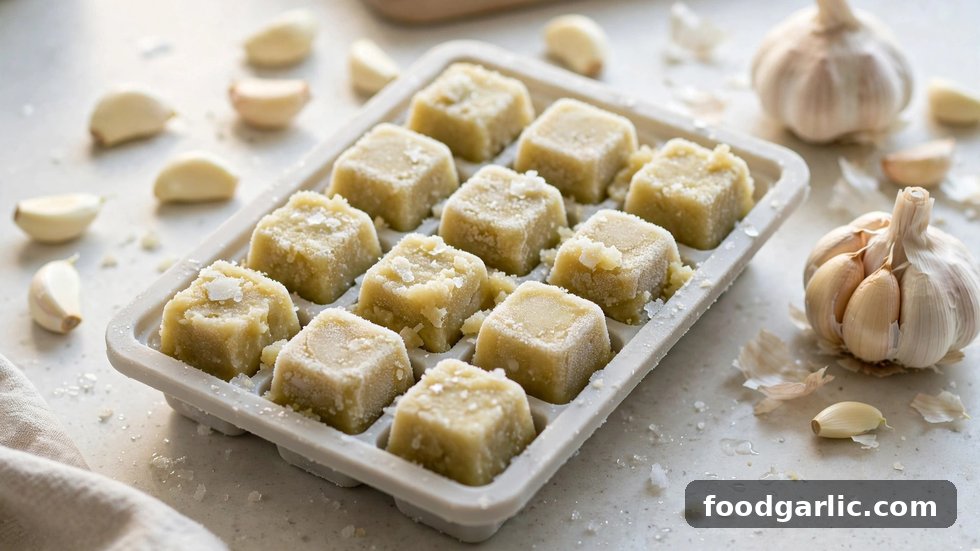
- Step 2: Pack the minced garlic into an ice cube tray — about 1 teaspoon per compartment equals roughly 1 clove.
- Step 3: Optional: drizzle a thin layer of olive oil over each cube. This protects against freezer burn and makes the cubes pop out easily. (Freeze oil-covered garlic only in the freezer, never store garlic in oil at room temperature — botulism risk.)
- Step 4: Freeze solid, then transfer cubes to a labeled freezer bag.
A standard ice cube tray holds about 2 tablespoons per slot — perfect for recipes. Silicone trays release the cubes most easily.
Method 3: Freezing Garlic Paste (Meal-Prep Favorite)
Garlic paste is the meal-prepper’s secret weapon: smooth, spoonable, and ready to melt into any dish. It is also the best format for mixing with ginger or herbs.
- Step 1: Blend peeled cloves in a food processor with 1–2 tablespoons of neutral oil per head of garlic until completely smooth.
- Step 2: Optional add-ins: a pinch of salt (helps preservation), fresh ginger (equal parts for ginger-garlic paste), or herbs.
- Step 3: Spoon into ice cube trays or dollop tablespoon-sized mounds onto a parchment-lined sheet.
- Step 4: Freeze solid, transfer to a freezer bag, and press flat to remove air.
Frozen paste cubes melt in seconds in a hot pan — ideal for stir-fries, curries, marinades, and soups. One tablespoon of paste roughly equals 3–4 cloves.
How to Cook with Frozen Garlic
- No thawing needed for cooked dishes: toss frozen cubes or cloves directly into hot oil, soups, or sauces.
- For sautés: add frozen garlic a minute after your onions — it thaws and sizzles almost instantly.
- For roasting: frozen whole cloves roast beautifully; toss with oil and add to sheet-pan dinners.
- For raw uses: grate frozen cloves on a microplane into dressings — the texture is actually ideal for this.
- Do not refreeze thawed garlic: use what you thaw, or keep thawed portions refrigerated for up to 4 days.
Storage Times and Mistakes to Avoid
- Best within 3–6 months: garlic is safe indefinitely when frozen solid, but flavor fades after about 6 months.
- Always label and date your bags — mystery cubes get ignored.
- Squeeze out air or use a vacuum sealer; oxygen causes freezer burn and dull flavor.
- Do not freeze unpeeled bulbs whole: the papery skins trap moisture and the cloves freeze into an unusable lump.
- Do not store garlic in oil at room temperature — this applies to thawed leftovers too. Refrigerate oil-packed garlic and use within 4 days.
Frequently Asked Questions
Does frozen garlic taste as good as fresh?
In cooked dishes, nearly identical. The texture softens, so it is less ideal for raw applications where you want crisp slices — but for sautés, sauces, roasts, and soups, most people cannot tell the difference.
Do I need to blanch garlic before freezing?
No. Unlike many vegetables, garlic does not need blanching before freezing. Just peel, portion, and freeze — blanching would actually damage the flavor.
Can I freeze roasted garlic?
Absolutely — roasted garlic freezes wonderfully. Squeeze the soft cloves into ice cube trays or a small container, freeze, and you have instant roasted garlic for spreads, soups, and mashed potatoes.
How do I stop my freezer from smelling like garlic?
Double-bag your garlic portions and squeeze out all the air. A vacuum sealer is the best solution — garlic odor escapes mainly through poorly sealed bags.
Freezing is the simplest way to make sure good garlic never goes to waste. Pick the method that fits your cooking style, label everything with the date, and enjoy fresh garlic flavor all year long.