
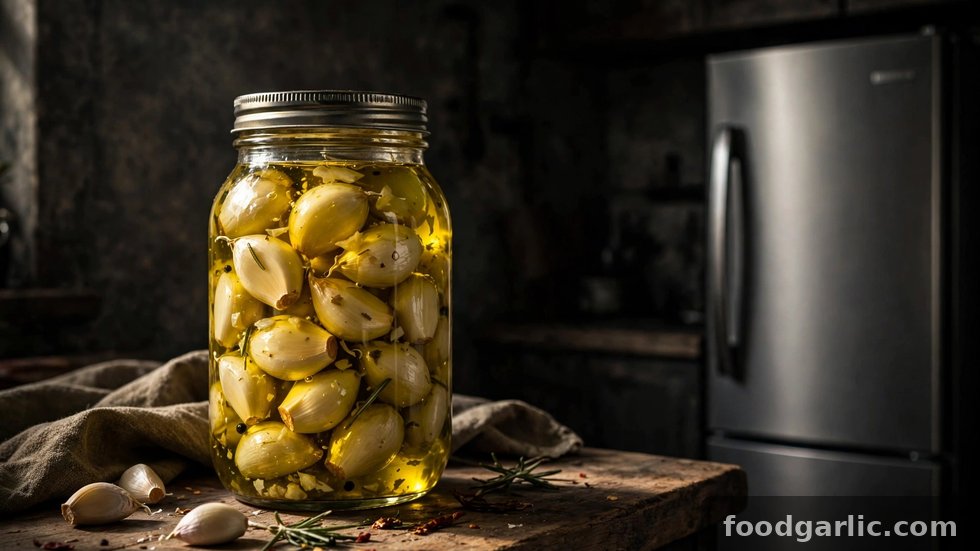
It looks rustic and charming: a jar of garlic cloves glistening in olive oil on the kitchen counter. It also happens to be one of the most dangerous things you can do with food at home. Storing garlic in oil at room temperature creates the perfect conditions for botulism.
In this article, you will learn exactly why this combination is risky, what botulism is and why you cannot detect it, and the safe alternatives that give you the same flavor without the danger.
- The Danger Explained
- What Is Botulism?
- Why You Cannot Detect It
- Common Myths Debunked
- Safe Alternatives
- What to Do With an Old Jar
- Frequently Asked Questions
The Danger Explained
Three factors combine to make garlic-in-oil at room temperature uniquely risky. Garlic is a low-acid food, with a pH well above the 4.6 threshold that inhibits Clostridium botulinum. Oil excludes oxygen, creating the anaerobic environment the bacteria need. And room temperature is exactly where they thrive.
Clostridium botulinum spores are widespread in soil and can be present on garlic. On their own they are harmless — but in a sealed jar of garlic and oil at room temperature, they can germinate, multiply, and produce botulinum toxin, one of the most potent natural poisons known.
Food-safety agencies are unambiguous: homemade garlic-in-oil mixtures must be refrigerated and used within days, or made with acidification. There is no traditional exception, no “my grandmother did it” exemption — the microbiology does not negotiate.
What Is Botulism?
Botulism is a serious illness caused by the botulinum toxin attacking the nervous system. Symptoms typically begin 12–36 hours after eating contaminated food: blurred or double vision, drooping eyelids, slurred speech, difficulty swallowing, muscle weakness, and eventually paralysis.
It is a medical emergency requiring antitoxin and often intensive care, including mechanical ventilation. While modern treatment has reduced the fatality rate, recovery can take weeks to months — and the illness is entirely preventable.
Foodborne botulism is rare precisely because the conditions it needs are specific. Garlic in oil at room temperature is one of the few home preparations that provides all of them at once — which is why it appears in food-safety warnings so often.
Why You Cannot Detect It
This is the detail that makes the risk so insidious: botulinum toxin is completely undetectable by sight, smell, or taste. A contaminated jar looks identical to a safe one. The oil is not cloudy, the garlic is not slimy, nothing smells off.
Unlike spoilage bacteria, which announce themselves with sour smells and visible mold, C. botulinum grows silently. “It smells fine” is not evidence of safety — it is the expected state of a dangerous jar.
The toxin is also heat-stable enough to survive brief cooking in some cases, so “I’ll just cook it” is not a reliable safeguard either. Prevention — proper preparation and storage — is the only real protection.
Common Myths Debunked
“The vinegar in my dressing makes it safe”
Only if the garlic itself is fully acidified (pH below 4.6 throughout). A splash of vinegar in the oil does not penetrate the cloves reliably. Proper acidification means simmering the garlic in vinegar solution before oiling.
“Refrigeration isn’t necessary if I use it quickly”
Even a few days at room temperature can be enough in warm kitchens. The safe rule is simple: garlic in oil lives in the fridge, period — from the moment it is made.
“Dried garlic in oil is fine at room temperature”
Dried herbs and garlic in oil are lower risk because the bacteria need moisture, but they are not zero risk — and flavored oils with any fresh ingredients follow the same refrigeration rule.
“Boiling the jar sterilizes it”
Home boiling (100°C) does not destroy botulism spores — that requires pressure canning at 121°C. Boiling the finished oil may kill active bacteria but leaves spores intact to germinate later.
Safe Alternatives
You do not have to give up garlic oil — just make it safely:
- Heat-infused oil: gently heat garlic in oil to 90–100°C for 15–20 minutes, then refrigerate and use within 7 days.
- Acidified garlic: simmer cloves in vinegar solution before covering with oil; refrigerate and use within a month.
- Make it fresh per meal: warm sliced garlic in oil for 2–3 minutes as you cook — zero storage risk.
- Garlic butter: mix roasted garlic into butter and refrigerate (use within a week) or freeze for months.
- Buy commercial: shelf-stable commercial garlic oils are acidified under controlled conditions and are genuinely safe at room temperature until opened.
What to Do With an Old Jar
If you find a jar of garlic in oil that has been sitting at room temperature — a gift, a forgotten pantry jar, a restaurant-style cruet — throw it away. Do not taste it, do not “cook it to be safe,” do not give it away.
When discarding, you can boil the contents for 10 minutes first to destroy any toxin before it goes in the trash, keeping it away from pets and children. Then wash the jar thoroughly with hot soapy water.
Going forward, label every homemade garlic oil jar with the date made and keep it refrigerated from minute one. Safe garlic oil is delicious garlic oil — there is no flavor worth the risk.
Frequently Asked Questions
How long can garlic stay in oil at room temperature?
It should not stay at room temperature at all. Garlic-in-oil mixtures must be refrigerated immediately after making. Even short periods at room temperature in a warm kitchen create risk.
Can cooking destroy botulism toxin in garlic oil?
Prolonged boiling can destroy the toxin, but it does not destroy the spores, which can germinate again. Cooking is not a reliable way to make an unsafe jar safe — prevention through proper storage is the only real safeguard.
Is store-bought garlic oil safe?
Yes. Commercial garlic oils are acidified and processed under strict controls, making them shelf-stable until opened. Always follow the label’s storage instructions after opening.
What about garlic in vinegar — is that safe?
Garlic fully submerged in vinegar (pH below 4.6) is much safer because the acid prevents botulism bacteria from growing. Properly pickled garlic can be stored at room temperature if prepared with a tested recipe.
2 thoughts on “Why You Should Never Store Garlic in Oil at Room Temperature”