
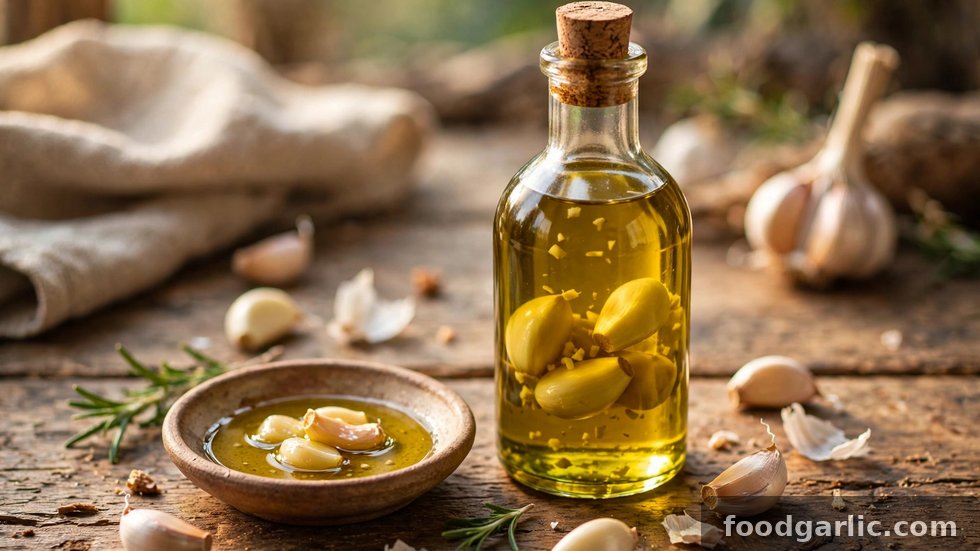
Infused garlic oil is one of those kitchen staples that sounds simple but hides a real safety risk most home cooks never hear about. Done right, it adds deep, savory flavor to breads, pastas, and dressings. Done wrong, it can create a genuine health hazard.
In this guide, you will learn why fresh garlic in oil at room temperature is dangerous, the science of botulism risk, and three safe methods for making garlic oil at home — plus how to store it so it stays both delicious and safe.
- Why Garlic Oil Can Be Risky
- Understanding the Botulism Risk
- Safe Method 1: Heat Infusion
- Safe Method 2: Oven Roasting
- Safe Method 3: Acidified Garlic
- Storage and Shelf Life
- Frequently Asked Questions
Why Garlic Oil Can Be Risky
Garlic is a low-acid vegetable, and oil creates an anaerobic environment — one without oxygen. When fresh garlic sits in oil at room temperature, it provides exactly the conditions where Clostridium botulinum spores can germinate and produce toxin.
The spores themselves are harmless and common in soil. The problem is the toxin, which causes botulism — a rare but potentially fatal illness. The tricky part is that contaminated oil looks, smells, and tastes completely normal. There is no warning sign.
This is why commercial garlic oil is acidified or heat-treated under strict food-safety controls. Home cooks cannot see toxin, so the only safe approach is to follow one of the proven safe methods below and always refrigerate the result.
Understanding the Botulism Risk
The bacteria behind botulism need three things to produce toxin: low acidity, no oxygen, and room temperature. Garlic cloves submerged in oil in a sealed jar check every box.
Refrigeration below 4°C (40°F) prevents the bacteria from growing, which is why safe garlic oil is always kept cold and used within days. Food-safety agencies are consistent on this point — there are no exceptions for “just a little bit” or “it smells fine.”
Safe Method 1: Heat Infusion
This is the simplest reliable method. It gives you a strongly flavored oil and soft, spreadable garlic cloves in under half an hour.
Ingredients
- 1 cup peeled garlic cloves (about 2–3 heads)
- 1½ cups mild olive oil or neutral oil
- A pinch of salt (optional)
Steps
Place the garlic and oil in a small saucepan. Warm over the lowest heat until the oil reaches about 90–100°C (195–215°F) — gentle bubbles around the cloves, not a hard fry. Keep the temperature steady for 15–20 minutes, stirring occasionally.
The cloves should turn lightly golden and completely soft. Do not let them brown deeply or the oil will taste bitter. Let the mixture cool, then transfer the garlic and oil together into a clean, dry glass jar.
Refrigerate immediately and use within 7 days. The cloves make a wonderful spread, and the oil is perfect for sautéing, drizzling over pizza, or brushing on grilled bread.
Safe Method 2: Oven Roasting
Roasting garlic in oil in the oven is a hands-off alternative that produces a deeper, caramelized flavor. It also reaches safe temperatures throughout.
Put peeled cloves in a small oven-safe dish and cover them fully with olive oil. Cover tightly with foil and bake at 150°C (300°F) for 45–60 minutes, until the cloves are golden and completely tender when pierced with a knife.
Cool to room temperature quickly, then jar and refrigerate. Because the garlic is fully cooked and the oil was heated through, this method is as safe as stovetop infusion — and the roasted garlic itself is arguably the best part.
Safe Method 3: Acidified Garlic
Acidification is the technique commercial producers use. By bringing the garlic’s acidity below pH 4.6 before it touches the oil, botulism bacteria cannot grow even at room temperature.
The home version: simmer peeled garlic cloves in a mixture of equal parts white vinegar and water with a teaspoon of salt for about 5 minutes. Drain, then cover with oil in a sterilized jar.
Storage and Shelf Life
No matter which method you use, the storage rules are simple and non-negotiable.
- Always refrigerate homemade garlic oil. Never store it at room temperature.
- Use within 7 days for heat-infused or roasted garlic oil.
- Use clean utensils every time — never double-dip or leave the jar open on the counter.
- Discard if you see cloudiness, off smells, bulging lids, or any sign of fermentation.
- Never freeze and re-thaw repeatedly; if you want longer life, freeze in ice-cube trays once, then thaw single portions.
One practical tip: refrigeration makes olive oil cloudy and thick. This is completely normal and reverses within minutes at room temperature. Take out only what you need for one meal.
Frequently Asked Questions
Can I just put raw garlic in olive oil and keep it in the fridge?
Raw garlic submerged in oil, even refrigerated, is still considered risky by food-safety agencies because the cold only slows bacterial growth. Heat-treated or acidified garlic is far safer. If you do use raw garlic in oil, keep it refrigerated and discard after 3–4 days — but the heat methods above are strongly preferred.
How long does homemade garlic oil last in the refrigerator?
Heat-infused or roasted garlic oil lasts about 7 days refrigerated. Acidified garlic oil made with vinegar can last up to a month refrigerated. Always label the jar with the date you made it.
Can I freeze garlic oil for longer storage?
Yes. Freeze garlic oil in an ice-cube tray, then transfer the cubes to a freezer bag. They keep for 3–4 months. Thaw only what you need and never refreeze.
What does garlic oil taste good on?
Drizzle it over pizza, pasta, roasted vegetables, and salads. Use it for sautéing or brushing grilled bread and bruschetta. The soft infused cloves can be mashed into butter or spread directly on toast.