
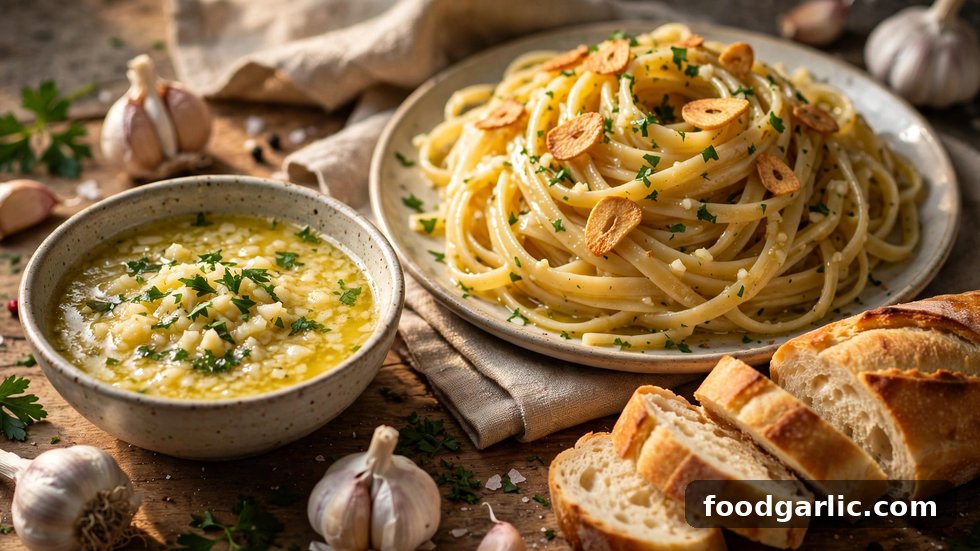
Few things beat the smell of garlic hitting warm butter. A good garlic butter sauce takes five minutes, costs almost nothing, and turns plain pasta or bread into something people ask about. The secret is in the details most recipes skip.
In this guide you will learn how to make a silky classic garlic butter sauce, five flavor variations, how to toss it with pasta like a restaurant, how to make proper garlic bread, and how to store leftovers safely.
Table of Contents
- What Makes a Great Garlic Butter Sauce
- The Classic Recipe: Step by Step
- 5 Flavor Variations Worth Trying
- Using It for Pasta (the Restaurant Way)
- Using It for Garlic Bread
- How to Store Garlic Butter Safely
- Frequently Asked Questions
What Makes a Great Garlic Butter Sauce
Three ingredients — butter, garlic, salt — but the technique decides everything. Real butter (not margarine) gives the rich flavor and proper emulsification. Fresh garlic, minced fine, beats jarred every time. And gentle heat is non-negotiable: garlic turns bitter the moment it browns.
The other secret is timing the garlic. Mince it, let it rest 10 minutes for allicin to form, then cook it gently. You get maximum garlic character without harshness — the best of both flavor and the compounds that make garlic interesting nutritionally.
The Classic Recipe: Step by Step
Ingredients (serves 4 as a pasta sauce)
- 115 g (1 stick) unsalted butter
- 6–8 garlic cloves, minced fine
- ½ teaspoon fine salt, plus more to taste
- ¼ teaspoon black pepper
- 2 tablespoons fresh parsley, chopped (optional)
- Squeeze of lemon juice (optional)
Method
Mince the garlic and let it rest 10 minutes. Melt the butter in a wide pan over medium-low heat. Add the garlic and salt, and cook gently for 2–3 minutes, stirring constantly, until fragrant and just turning golden at the edges — never brown.
Remove from the heat, stir in the pepper and parsley, and finish with lemon juice if using. Taste and adjust salt. That is it — a glossy, fragrant sauce ready in under 10 minutes.
The most common mistake is impatience: high heat browns the garlic in seconds and the whole batch tastes bitter. If your garlic browns, start over — bitter cannot be fixed.
5 Flavor Variations Worth Trying
- Herb garlic butter: add thyme, rosemary, or basil along with the parsley for an herby profile.
- Spicy garlic butter: stir in ½ teaspoon red pepper flakes with the garlic for gentle heat.
- Lemon garlic butter: double the lemon juice and add a teaspoon of zest — bright and perfect for seafood pasta.
- Roasted garlic butter: mash a whole head of roasted garlic into softened butter instead of cooking raw garlic — sweeter and milder.
- Parmesan garlic butter: whisk in ¼ cup finely grated Parmesan off the heat for a richer, clingier sauce.
Once you know the base method, these variations take no extra time. Make the classic version first, then experiment — you will quickly find your house style.
Using It for Pasta (the Restaurant Way)
Garlic butter sauce and pasta are a perfect match, but the restaurant trick is pasta water. Before draining your pasta, save a cup of the starchy cooking water.
Toss the hot drained pasta directly into the pan with the garlic butter, then add splashes of pasta water while tossing. The starch emulsifies the butter into a silky sauce that clings to every strand instead of pooling at the bottom of the bowl.
Finish with extra Parmesan and black pepper. Long pasta like spaghetti or linguine shows off the sauce best, but it works beautifully on penne, gnocchi, or even filled tortellini.
Using It for Garlic Bread
For garlic bread, make the sauce with slightly less butter per clove so it spreads thick. Split a baguette or ciabatta lengthwise, spread generously, wrap loosely in foil, and bake at 200°C (400°F) for 10 minutes.
Unwrap for the last 3–4 minutes if you like a crisp top. For cheesy garlic bread, add mozzarella before the final uncovered bake. Rest 2 minutes before slicing — the butter needs a moment to settle into the crumb.
Day-old bread actually makes better garlic bread than fresh: it is sturdier, absorbs butter without going soggy, and crisps beautifully.
How to Store Garlic Butter Safely
- Refrigerator: store in an airtight container for up to 1 week. Roll it into a log in plastic wrap for easy slicing.
- Freezer: freeze in tablespoon portions (ice cube trays work well) for up to 3 months. Thaw in the fridge or melt straight into a hot pan.
- Food safety note: garlic-in-oil or garlic-in-butter mixtures stored at room temperature carry a botulism risk. Always refrigerate or freeze.
- Reheating: melt gently over low heat; high heat will brown the garlic bits and turn them bitter.
Frequently Asked Questions
Can I use garlic powder instead of fresh garlic?
You can in a pinch — about ⅛ teaspoon of garlic powder per clove — but the flavor is flatter and less aromatic. Fresh garlic is the whole point of this sauce; powder is a backup, not a substitute.
Why did my garlic butter sauce taste bitter?
Almost certainly the garlic browned. Garlic goes from golden to bitter in under a minute over high heat. Cook it gently over medium-low, stir constantly, and pull it off the heat at the first sign of deep color. When in doubt, start over.
Can I make garlic butter sauce dairy-free?
Yes — use a good olive oil or a dairy-free butter alternative. Olive oil gives a fruitier, lighter sauce that is excellent on pasta. The technique stays the same: gentle heat, no browning.
How much garlic butter sauce per pound of pasta?
The classic recipe above (1 stick of butter) generously coats 450 g (1 lb) of dried pasta. If you like it lighter, use ¾ stick. Always save pasta water — it stretches the sauce and improves the texture.