
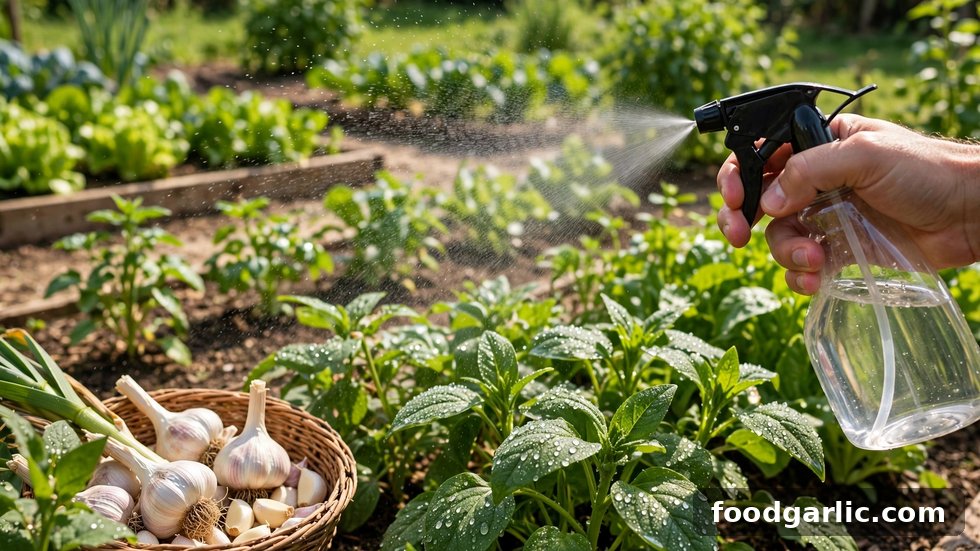
Powdery mildew on your roses, black spot on your tomatoes, damping-off killing your seedlings — fungal diseases are every gardener’s nightmare. Before reaching for synthetic fungicides, consider what’s already in your kitchen: garlic’s natural sulfur compounds have real antifungal activity that gardeners have used for generations.
This guide explains how garlic fights plant fungi, gives you a proven garlic fungicide spray recipe, shows which plants it works best on, and covers the limitations and safety precautions you need to know.
Table of Contents
- How Garlic Fights Plant Fungi
- DIY Garlic Fungicide Spray Recipe
- Which Plant Diseases It Works Against
- How to Apply It Correctly
- Limitations and Risks to Know
- Companion Planting: Garlic as Living Protection
- Frequently Asked Questions
How Garlic Fights Plant Fungi
Garlic’s antifungal power comes from the same chemistry behind its bite: sulfur compounds, chiefly allicin, which forms when garlic cells are crushed. These compounds disrupt fungal cell membranes and inhibit spore germination. Lab studies have shown garlic extracts inhibiting plant pathogens behind powdery mildew, downy mildew, and various leaf spots.
It is a contact treatment: it works on fungi it touches but is not absorbed into the plant like synthetic systemic fungicides. That defines both its strength and limit — excellent as a preventative and for early, mild infections, but no contact spray can cure disease already established deep inside plant tissue.
DIY Garlic Fungicide Spray Recipe
This is the classic gardener’s recipe — simple, cheap, and effective for mild fungal problems.
- 1 whole head of garlic (10–12 cloves), peeled and crushed
- 1 liter (4 cups) water
- 1 teaspoon liquid soap (pure castile or insecticidal soap — no detergents with degreasers)
- 1 tablespoon vegetable oil (optional — helps the spray stick to leaves)
Method: Blend the crushed garlic with the water and steep 24 hours to extract the active compounds. Strain through cheesecloth (unstrained bits clog sprayers), stir in soap and oil, and use within a few days — the actives break down quickly.
Always test first: Spray a few leaves and wait 24 hours. If you see browning or burn marks, dilute the mix with more water. Some tender plants are sensitive to garlic sprays.
Which Plant Diseases It Works Against
- Powdery mildew — the white powdery coating on roses, cucumbers, squash, and zinnias. Garlic spray is most proven here; apply at the first sign.
- Downy mildew — yellowish patches with fuzzy undersides on grapes, lettuce, and brassicas. Best as a preventative in humid weather.
- Black spot (roses) — may help slow early infections, though severely affected leaves should be removed and destroyed.
- Damping-off (seedlings) — a light garlic drench on seed-starting mix may help suppress the soil fungi that kill young seedlings.
- Rust (early stages) — may reduce spread on beans and ornamentals when caught early.
Garlic spray works best as a weekly preventative routine during humid, disease-prone weather — routine sprays do more than any single rescue treatment.
How to Apply It Correctly
- Spray in the evening or on cloudy days — wet leaves in hot sun can scorch, and UV breaks down the active compounds faster.
- Coat both sides of leaves — fungi often start on the undersides. Lift and spray thoroughly.
- Reapply after rain — garlic spray washes off easily since it is not systemic.
- Repeat every 7 to 10 days during disease season, or every 5 days during active mild infection.
- Remove badly infected leaves first — spray cannot save them, and they are spore factories. Bag and bin them; do not compost.
Combine spraying with good garden hygiene: water at the base, space plants for airflow, and clear fallen leaves.
Limitations and Risks to Know
- Not a cure-all: Garlic spray suppresses and prevents; it cannot cure established infections like deep cankers, advanced blights, or soil-borne wilts.
- Leaf burn is possible: Too-strong mixes or spraying in hot sun can cause phytotoxicity — brown edges and spots. Always patch-test and spray in cool conditions.
- Affects beneficials too: Its antimicrobial action is not selective — it can harm beneficial microbes and pollinators on contact. Avoid spraying open flowers.
- Short shelf life: Active compounds degrade within days — make small batches fresh each time.
Companion Planting: Garlic as Living Protection
Instead of spraying, let growing garlic do the work. Planting cloves around roses, fruit trees, and vegetable beds is a classic companion-planting strategy — living roots exude sulfur compounds into the soil, and the foliage may deter some pests.
- Roses: Traditionally believed to reduce black spot and aphids at the base.
- Tomatoes and peppers: Interplanting may help with some soil-borne issues and spider mites.
- Fruit trees: A garlic ring around the trunk is an old orchard practice.
- Keep away from beans and peas — garlic can inhibit legume growth.
Companion planting evidence is mostly anecdotal, but it costs nothing to try — and you get a garlic harvest as a bonus.
Frequently Asked Questions
Does garlic spray really kill fungus on plants?
Garlic’s sulfur compounds have demonstrated antifungal activity in studies, particularly against powdery mildew and similar surface fungi. It works best as a preventative or for early, mild infections — it suppresses fungi on contact but cannot cure deep or advanced disease.
Can I use garlic powder instead of fresh garlic for the spray?
Fresh garlic is significantly more effective because the active compound allicin forms only when fresh cloves are crushed. Garlic powder has far less active chemistry. If you must use powder, use 2 tablespoons per liter, but expect weaker results.
Will garlic spray harm my plants?
It can if overused — too-strong mixes or spraying in hot sun may burn leaves. Always patch-test on a few leaves first, spray in the evening, and dilute if you see any browning. Most established plants tolerate a properly diluted spray well.
How often should I spray garlic fungicide?
Every 7 to 10 days as a preventative during humid weather, or every 5 days when fighting an active mild infection. Always reapply after rain, since the spray washes off and is not absorbed into the plant.