
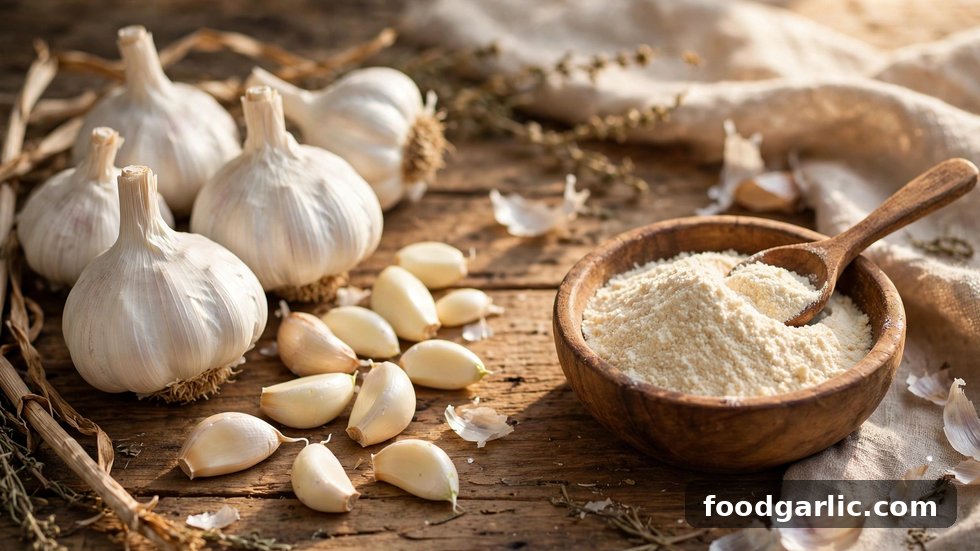
The recipe says “3 cloves of garlic” — but your garlic has sprouted, and all you have is a jar of garlic powder. Can you swap one for the other without ruining dinner? The answer is yes, but the conversion is not as simple as you might think.
In this guide, you will get the exact garlic powder to fresh garlic conversion ratios, learn when powder works beautifully and when only fresh will do, and discover the pro tricks that make powder taste far better. You will also learn how garlic powder differs from garlic salt and granulated garlic.
Table of Contents
- The Conversion: Garlic Powder to Fresh Garlic
- How Garlic Powder and Fresh Garlic Differ
- When Garlic Powder Works Best
- When Only Fresh Garlic Will Do
- Pro Tips for Better-Tasting Garlic Powder
- Garlic Powder vs Granulated Garlic vs Garlic Salt
- Frequently Asked Questions
The Conversion: Garlic Powder to Fresh Garlic
The standard conversion used by professional kitchens is simple to memorize:
- 1 fresh garlic clove = 1/8 teaspoon garlic powder
- 1 teaspoon garlic powder = about 8 cloves (roughly one small head)
- 1 tablespoon garlic powder = about 3 heads of garlic
Why so little powder? Dehydration concentrates garlic dramatically — one clove shrinks to a fraction of its volume when dried and ground. Start with the conversion amount, then taste and adjust, because powder potency varies by brand and age.
Quick-Reference Conversion Table
- 1 clove → 1/8 tsp powder
- 2 cloves → 1/4 tsp powder
- 4 cloves → 1/2 tsp powder
- 8 cloves (1 head) → 1 tsp powder
- 1 tsp powder → 8 cloves fresh
How Garlic Powder and Fresh Garlic Differ
They are not the same ingredient wearing different clothes — drying changes garlic’s chemistry.
- Flavor profile: fresh garlic is sharp, pungent, and complex; powder is mellow, toasty, and one-dimensional by comparison.
- Allicin: fresh crushed garlic produces allicin (the main bioactive compound); garlic powder contains very little, so health benefits differ.
- Texture: fresh garlic adds body and bite; powder dissolves invisibly into liquids and rubs.
- Heat behavior: powder burns quickly in hot oil — fresh garlic is more forgiving.
- Shelf life: powder lasts 2–3 years in a cool pantry; fresh bulbs last weeks.
When Garlic Powder Works Best
Garlic powder shines anywhere you want even, background garlic flavor without texture or harshness.
- Dry rubs and spice blends: distributes evenly where fresh garlic would clump or burn.
- Breading and coatings: fried chicken, breaded fish, roasted chickpeas.
- Soups, stews, and sauces: melts in seamlessly; add early for mellow flavor.
- Popcorn, roasted nuts, and snacks: fine powder clings where fresh garlic cannot.
- Dips and dressings that will sit a while — powder’s flavor stays stable, while raw garlic intensifies over time.
- When you are out of fresh garlic — the most common and completely valid reason.
When Only Fresh Garlic Will Do
Some dishes depend on fresh garlic’s punch, texture, or chemistry — powder is a poor substitute here.
- Raw applications: aioli, bruschetta, salsa, salad dressings where garlic is a star.
- Garlic-forward dishes: 40-clove chicken, garlic bread, aglio e olio.
- Roasting whole: sweet, caramelized roasted cloves cannot be faked with powder.
- Infused oils and butters where visible garlic pieces matter.
- Health-focused uses: raw crushed garlic for allicin — powder will not deliver the same compounds.
Pro Tips for Better-Tasting Garlic Powder
- Bloom it in oil: stir powder into warm (not screaming-hot) oil for 30 seconds before adding other ingredients — this wakes up its flavor dramatically.
- Add it at the right time: in soups and sauces, add powder early so it melds; as a finishing seasoning, sprinkle it on at the end.
- Combine fresh + powder: use fresh garlic for the base and a pinch of powder to round out and deepen the flavor — a common restaurant trick.
- Check the date: powder older than a year loses potency fast. If yours smells like dust, replace it.
- Store properly: keep the jar away from the stove — heat and steam above the cooktop kill flavor quickly.
Garlic Powder vs Granulated Garlic vs Garlic Salt
- Garlic powder: finely ground, flour-like; dissolves instantly; best for smooth sauces, rubs, and baking.
- Granulated garlic: coarser, sand-like texture; less likely to clump; preferred by many chefs for rubs and general cooking.
- Garlic salt: typically 3 parts salt to 1 part garlic powder — convenient but inflexible. If substituting for powder, use 3/4 teaspoon garlic salt per 1/4 teaspoon powder and reduce other salt in the recipe.
Interchangeable in most recipes: powder and granulated garlic substitute 1:1. Garlic salt is the odd one out — always adjust the recipe’s salt.
Frequently Asked Questions
How much garlic powder equals 3 cloves of garlic?
Use 3/8 teaspoon of garlic powder — or round to a scant 1/2 teaspoon for simplicity. Start with less and taste; you can always add more.
Is garlic powder as healthy as fresh garlic?
Not quite. Drying destroys most allicin, garlic’s key bioactive compound. Powder still contains some beneficial sulfur compounds and antioxidants, but for health purposes, fresh crushed garlic is superior.
Can I substitute garlic salt for garlic powder?
Yes, but carefully: garlic salt is about 75% salt. Replace each 1/4 teaspoon of powder with 3/4 teaspoon of garlic salt, and cut back the recipe’s salt by the same amount.
Why does my garlic powder taste bitter?
Two likely causes: it burned in hot oil (add it to cooler oil or later in cooking), or the jar is old and stale. Fresh powder should smell pungent, not dusty.
Neither fresh garlic nor garlic powder is always better — the right choice depends on the dish in front of you. Use fresh cloves when garlic is the star and you want sharp, complex flavor; reach for powder when you need even seasoning in rubs, batters, and quick sauces. Keep both in your kitchen, follow the conversion guide above, and your cooking will be better for it.