
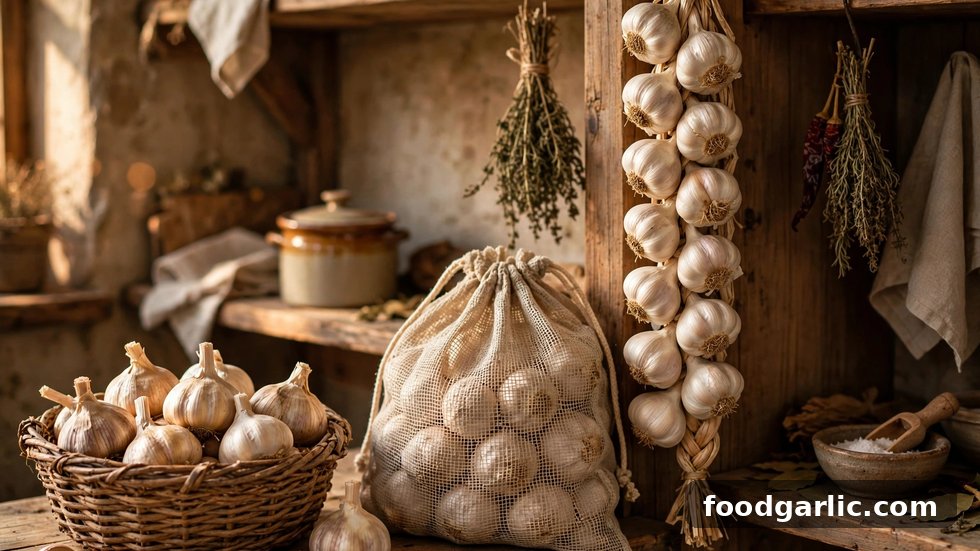
Nothing is more disappointing than reaching for a garlic bulb and finding it soft, sprouted, or moldy. The good news: properly stored garlic lasts for months — whole bulbs keep 3–6 months at room temperature, and the right long-term methods stretch that even further.
In this guide you will learn how to choose long-lasting bulbs, the ideal conditions for whole garlic, the storage mistakes that ruin it fast, how to store peeled and prepped garlic, long-term methods like freezing and dehydrating, and how to tell when garlic has gone bad.
Table of Contents
- Choosing Bulbs That Last
- Storing Whole Bulbs: The Basics
- Storage Mistakes That Ruin Garlic Fast
- Storing Peeled, Minced, and Prepped Garlic
- Long-Term Methods: Freezing, Dehydrating, and More
- How to Tell If Garlic Has Gone Bad
- Frequently Asked Questions
Choosing Bulbs That Last
Storage life starts at the store. Choose bulbs that are firm, heavy for their size, and wrapped in tight, dry, papery skins. Avoid bulbs with soft spots, green sprouts already poking out, or broken, damp skins.
Variety matters too. Hardneck garlic has bigger cloves and bolder flavor but typically stores 3–4 months. Softneck garlic — the braided kind — stores longest, often 6–9 months under good conditions. If long storage is your goal, buy softneck.
Storing Whole Bulbs: The Basics
Whole, unpeeled garlic wants the same conditions as onions and potatoes: cool, dark, dry, and ventilated. A pantry, cupboard, or countertop basket away from the stove works perfectly.
- Temperature: around 15–18°C (60–65°F) is ideal — normal room temperature is fine.
- Light: keep bulbs in the dark; light encourages sprouting.
- Airflow: store in a mesh bag, paper bag with holes, wire basket, or braided and hung — never sealed airtight.
- Humidity: dry air is essential; damp environments invite mold.
- Separation: keep garlic away from potatoes and onions, which release moisture and gases that speed spoilage.
Stored this way, whole bulbs easily last 3–6 months, with softneck varieties at the longer end. Check your stock monthly and use any softening bulbs first.
Storage Mistakes That Ruin Garlic Fast
- Refrigerating whole bulbs: the cold, humid fridge triggers sprouting and can make cloves rubbery. Whole bulbs belong at room temperature.
- Plastic bags: sealed plastic traps moisture and causes mold within days. Always allow airflow.
- Storing in oil at room temperature: garlic-in-oil mixtures at room temperature can grow botulism-causing bacteria. Refrigerate or freeze them instead.
- Near the stove or sink: heat and steam are garlic’s enemies — keep it in a cool, dry spot.
- Leaving broken bulbs: once a bulb is broken into loose cloves, the clock speeds up — use them within weeks, not months.
Storing Peeled, Minced, and Prepped Garlic
Once peeled, garlic’s storage rules change completely — it now needs the refrigerator:
- Peeled cloves: airtight container in the fridge, up to 1 week.
- Minced or crushed: airtight container in the fridge, 2–3 days for best flavor (longer is safe but the taste dulls).
- In oil: refrigerate immediately and use within 1 week — or better, freeze it.
- Garlic paste: freeze in teaspoon portions in ice cube trays for up to 3 months.
The pattern is simple: intact skin protects at room temperature; once the skin is gone, cold storage takes over.
Long-Term Methods: Freezing, Dehydrating, and More
Freezing (easiest)
Garlic freezes beautifully. Freeze peeled cloves whole on a tray, then bag them — or freeze minced garlic or paste in ice cube trays. Use straight from frozen; no thawing needed for cooking. Keeps 3–6 months with good flavor.
Dehydrating and powder
Slice cloves thin and dehydrate at 60°C (140°F) until brittle, then grind into powder or store as chips. Homemade garlic powder beats store-bought on flavor and keeps a year or more in an airtight jar.
Pickling
Peeled cloves pickled in vinegar brine keep for months refrigerated and make a tangy, crunchy snack or condiment. The acidity keeps them safe — a good use for a bumper harvest.
Braiding
Softneck garlic’s flexible stalks can be braided into hanging ropes — the traditional farmhouse method. It looks beautiful, keeps bulbs ventilated, and makes it easy to snip off a bulb as needed.
How to Tell If Garlic Has Gone Bad
- Soft or mushy cloves: fresh cloves are firm; softness means decay has started.
- Dark spots or mold: blue-green or black fuzz, especially between cloves — discard the bulb.
- Shriveled, hollow cloves: dried out from age; safe but flavorless — compost them.
- Sour or off smell: fresh garlic smells pungent and clean; sourness means spoilage.
- Green sprouts: sprouted garlic is safe to eat — just milder and slightly bitter. Remove the green shoot if the bitterness bothers you.
When in doubt, throw it out — garlic is cheap, and moldy bulbs are not worth the risk.
Frequently Asked Questions
Can I store garlic in the refrigerator?
Whole, unpeeled bulbs: no — the fridge’s cold humidity causes sprouting and rubbery texture. Peeled or prepped garlic: yes, absolutely — it needs refrigeration. Match the method to the state of the garlic.
How long does garlic last at room temperature?
Whole bulbs: 3–6 months in cool, dark, ventilated conditions (softneck lasts longest). Loose unpeeled cloves: 3–4 weeks. Peeled cloves at room temperature: use within a day or refrigerate.
Is sprouted garlic safe to eat?
Yes. Sprouted garlic is safe — the green shoot is just the plant trying to grow. It tastes milder and slightly more bitter than unsprouted garlic. Interestingly, some research suggests sprouted garlic may have higher antioxidant activity.
Why did my garlic turn blue or green in pickles?
This is a harmless chemical reaction between garlic’s sulfur compounds and acids or minerals (like copper in water). Blue-green garlic in pickles or cooked dishes is safe to eat — it is chemistry, not spoilage.
Bottom line: garlic stays fresh for months when you give it what it wants — cool air, darkness, and room to breathe. Skip the fridge and plastic bags, check your bulbs weekly, and turn any softening cloves into paste or powder before they go to waste. With these simple habits, you will always have fresh garlic ready for your next meal.