
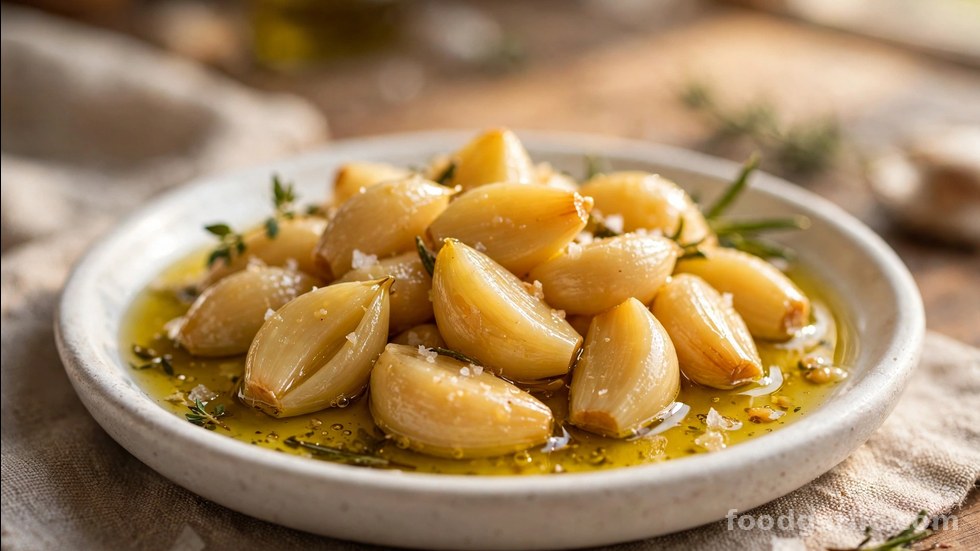
What Is Garlic Confit?
“Confit” (pronounced kon-FEE) is the French technique of cooking food slowly in fat at low temperature. Peeled cloves are submerged in olive oil and cooked gently — never fried — until golden, tender, and sweet. Unlike roasting whole garlic cloves, which uses dry oven heat, confit bathes the cloves in oil, giving them a silkier texture and infusing the oil with deep garlic flavor. You get two products in one: the confit cloves and a garlic-infused oil that is liquid gold for cooking.
Table of Contents
- What Is Garlic Confit?
- Ingredients and Equipment
- Step-by-Step Method
- Temperature Control Tips
- Botulism Safety Warning: Read This First
- How to Store Garlic Confit
- Serving Ideas
- FAQs
Ingredients and Equipment
Ingredients
- 2–3 whole heads of garlic (about 25–35 cloves), peeled — firm, heavy heads with no green sprouts
- 1 to 1½ cups extra-virgin olive oil — enough to fully submerge the cloves
- 2–3 sprigs fresh thyme or rosemary (optional)
- 1 bay leaf (optional)
- ½ teaspoon whole black peppercorns (optional)
- ½ teaspoon flaky sea salt
Equipment
- Small heavy-bottomed saucepan or oven-safe skillet
- Instant-read thermometer (strongly recommended)
- Clean glass jar with a tight-fitting lid, sterilized
Tip: Smash each clove lightly with the flat of a knife — the skins slip right off. Slightly bruised cloves are fine here since they are going into oil anyway.
Step-by-Step Method
Step 1: Prep the garlic
Peel all the cloves and trim any brown spots or green sprouts (sprouted centers taste bitter). Pat the cloves dry — water in the oil causes splattering and shortens shelf life.
Step 2: Combine in the pan
Place the cloves in a single layer in your saucepan. Pour in enough olive oil to completely cover every clove — exposed garlic will not confit evenly and is a food-safety risk (see below). Add herbs, peppercorns, and salt if using.
Step 3: Bring up to temperature slowly
Set the pan over the lowest possible heat. You want the oil at 180–200°F (82–93°C) — shimmering with the occasional lazy bubble, never a rolling simmer. Vigorous bubbling means the heat is too high: pull the pan off the burner for a minute. This gentle warm-up takes about 10 minutes.
Step 4: Slow-cook for 45–60 minutes
Hold 180–200°F for 45 to 60 minutes, stirring gently once or twice. The cloves are done when deep golden and completely tender — a knife slides through with no resistance. They should not brown darkly; browning means the temperature crept too high.
Step 5: Cool and jar
Cool in the pan for about 20 minutes, then transfer cloves and oil to your sterilized jar, keeping the cloves fully submerged in oil. Seal and refrigerate immediately.
Oven alternative: Combine everything in an oven-safe dish, cover with foil, and bake at 275°F (135°C) for 1 to 1½ hours until tender. The oven’s ambient heat is more forgiving than a stovetop burner.
Temperature Control Tips
- Use a thermometer. Eyeballing oil temperature is the number one cause of failed confit — too cool and the garlic stays raw-tasting; too hot and it fries and turns bitter.
- Low and slow wins. The 180–200°F (82–93°C) target is well below frying temperature. Patience is the whole technique.
- Choose a small, heavy pan. A wide thin pan creates hot spots; a small heavy saucepan keeps the oil temperature even.
- Don’t crowd. Cloves in a single layer cook evenly; stacked cloves insulate each other.
- Watch the color. Pale gold = perfect. Deep brown = too hot; use that batch quickly rather than storing it.
Botulism Safety Warning: Read This First
Garlic stored in oil at room temperature can grow Clostridium botulinum, the bacterium that causes botulism — rare but potentially fatal food poisoning. Garlic is low-acid, oil creates an oxygen-free environment, and room temperature is the danger zone. The rules are simple and non-negotiable:
- Always refrigerate garlic confit and garlic-infused oil — never store at room temperature
- Keep cloves fully submerged in oil at all times
- Use within 2–3 weeks (when in doubt, freeze it)
- Freeze for long-term storage: freeze in ice-cube trays, then transfer cubes to a freezer bag — keeps for months
- Discard if in doubt: off smells, cloudiness, bulging lids, or fizzing mean throw it out, no tasting
For more on flavored oils without the risk, see our guide to infused garlic oil made safely.
How to Store Garlic Confit
- Refrigerator: 2–3 weeks in a sealed jar, cloves submerged. The oil will solidify and turn cloudy — normal for olive oil, reverses at room temperature.
- Freezer: Up to 3 months in small portions (ice-cube trays work perfectly).
- The infused oil: Strain leftover oil into a clean bottle, refrigerate, and use within 2–3 weeks.
- Serving from the fridge: Let the jar sit at room temperature 15–20 minutes so the oil liquefies, then return it to the fridge promptly.
Serving Ideas
- Spread on crusty bread: Mash warm confit cloves onto toasted sourdough with flaky salt — the simplest and best use
- Pasta: Toss whole cloves through hot spaghetti with the infused oil, chili flakes, and parmesan
- Mashed potatoes: Fold mashed confit cloves into buttered mash for the ultimate side dish
- Salad dressings: Whisk mashed cloves with the infused oil, lemon juice, and Dijon for an instant vinaigrette
- Pizza and flatbreads: Dot whole cloves over pizza before baking
- Garlic butter upgrade: Mash confit cloves into softened butter — a mellow twist on homemade garlic butter sauce
- Soups and stews: Stir a spoonful into tomato soup or lentil stew at the end of cooking
FAQs
Can I make garlic confit without a thermometer?
You can, but it is risky for beginners. Keep the burner on its absolute lowest setting and look for the barest shimmer with an occasional bubble — active bubbling or quick browning means it is too hot.
How long does garlic confit last in the fridge?
Two to three weeks in a sealed jar with cloves fully submerged in oil. For longer storage, freeze it — frozen confit keeps up to 3 months.
Why did my olive oil solidify in the fridge?
Completely normal. Olive oil’s fats crystallize below about 50°F (10°C), turning it cloudy and thick. It liquefies again within minutes at room temperature.
Can I reuse the oil after the cloves are gone?
Yes — the leftover infused oil is one of the best parts. Strain it, refrigerate it, and use within 2–3 weeks for dressings, roasting vegetables, or drizzling over finished dishes.
Is garlic confit healthier than raw garlic?
Different, not better or worse. Slow cooking reduces allicin, but the cloves remain a flavorful source of antioxidants — and you will honestly eat far more garlic in this delicious form than raw. Think of confit as a culinary delight with modest health perks, not a supplement.