
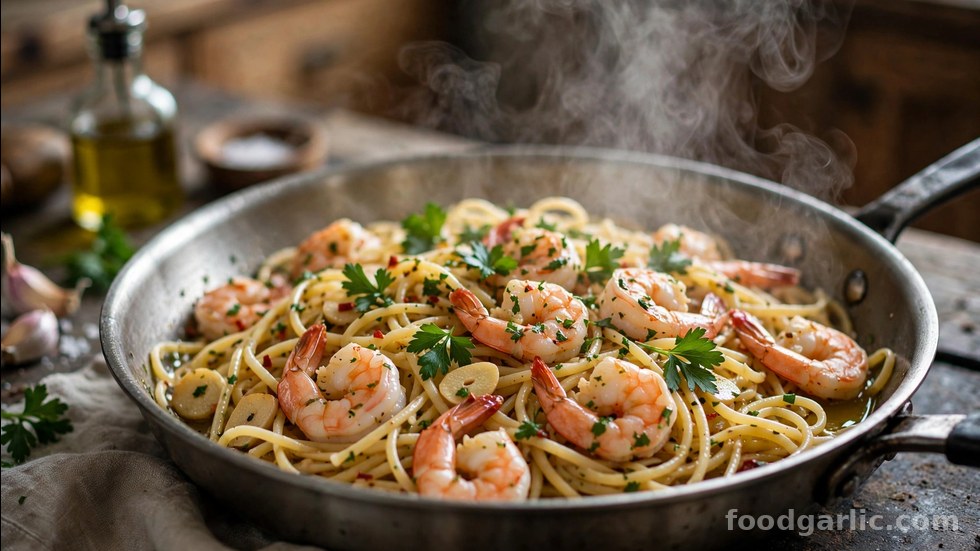
Some dinners need to be fast and unforgettable. This 15-minute garlic shrimp pasta is exactly that weeknight hero: plump shrimp, a glossy sauce of olive oil, butter, lemon, and an unapologetic amount of garlic, all clinging to strands of spaghetti. It tastes like something from a coastal trattoria, but the entire thing — from boiling water to plated pasta — takes less time than scrolling for a takeout menu. Here is the full recipe, the technique behind it, and every trick to keep the garlic sweet instead of scorched.
Ingredients (Serves 2–3)
- 8 oz (225 g) spaghetti or linguine
- 12 oz (340 g) large shrimp, peeled and deveined, tails on or off
- 6 cloves garlic, thinly sliced — not minced
- ¼ cup extra-virgin olive oil
- 3 tablespoons unsalted butter
- ½ teaspoon red pepper flakes (adjust to taste)
- Zest and juice of 1 lemon
- ½ cup dry white wine (or extra pasta water)
- ½ cup fresh parsley, roughly chopped
- Salt and black pepper to taste
Slicing the garlic rather than mincing it is deliberate: thin coins cook more evenly and are less likely to burn in the hot oil. They also look beautiful scattered through the finished pasta — pale golden discs instead of tiny browned bits. If you want to level up your garlic handling generally, the same patience applies when using garlic in marinades, where gentle treatment extracts flavor without harshness.
Step-by-Step: 15 Minutes, Start to Finish
1. Boil the pasta (0–8 minutes)
Bring a large pot of well-salted water to a rolling boil and cook the spaghetti 1 minute shy of the package directions. Before draining, reserve 1 cup of the starchy pasta water — this is liquid gold and the key to a silky sauce. The steps below happen while the pasta cooks, so the timing overlaps perfectly.
2. Sear the shrimp (8–11 minutes)
Pat the shrimp very dry and season with salt and pepper. Heat 2 tablespoons of the olive oil in a large skillet over medium-high heat until shimmering. Add the shrimp in a single layer and sear 90 seconds per side until just pink — they will finish cooking in the sauce, so pull them early. Transfer to a plate.
3. Bloom the garlic (11–13 minutes)
Reduce the heat to medium-low. Add the remaining olive oil, butter, garlic slices, and red pepper flakes. Cook gently, stirring, for 1–2 minutes until the garlic is pale gold and fragrant. This is the most important moment of the dish: garlic goes from sweet and nutty to bitter and acrid in seconds, so the second you see color, move on.
4. Build the sauce and bring it together (13–15 minutes)
Pour in the white wine and let it bubble for 1 minute, scraping up the browned bits — those caramelized shrimp juices are pure flavor and should never be left stuck to the pan. Add the lemon zest and juice, then the drained pasta straight into the skillet. Toss vigorously, splashing in reserved pasta water a few tablespoons at a time until the sauce turns glossy and clings to every strand. Return the shrimp, toss in the parsley, taste for salt, and serve immediately with extra lemon wedges.
The Pasta Water Trick, Explained
Starchy pasta water is an emulsifier: the dissolved starch binds the oil, butter, and wine into a creamy sauce instead of a greasy puddle at the bottom of the bowl. Two rules make it work:
- Salt the water aggressively — it should taste like the sea. This seasons the pasta from the inside.
- Add the water gradually and toss over the heat. Too much at once thins the sauce; a little at a time builds body.
Garlic Timing: How to Never Burn It
Garlic burns because its sugars caramelize fast and its small pieces have huge surface area. In this dish, three choices protect you:
- Slice, don’t mince — thicker pieces tolerate heat longer.
- Cook it after the shrimp, over lowered heat, so it never meets a ripping-hot pan.
- Watch, don’t wander — pale gold is perfect; deep brown is ruined. When in doubt, pull it early.
For a crunchy contrast on top, consider making a batch of crispy fried garlic chips as a garnish — they add texture and double down on the garlic theme.
Easy Variations
- Lemon-herb: double the lemon and add fresh basil or dill alongside the parsley.
- Spicy chili: add a sliced fresh red chili with the pepper flakes and finish with chili oil.
- Creamy: stir in ¼ cup heavy cream with the pasta water for a richer, Alfredo-adjacent sauce.
- Veggie boost: toss in halved cherry tomatoes or baby spinach during the last minute.
- No wine: use chicken stock or extra pasta water plus a splash more lemon juice.
Wine Pairing
The same crisp white you cook with is the one to pour: a Pinot Grigio, Sauvignon Blanc, or unoaked Chardonnay matches the lemon and cuts through the butter. Avoid heavy reds — they bulldoze the delicate shrimp and garlic.
Leftovers and Meal Prep
This dish is best eaten immediately, but leftovers keep 2 days refrigerated in an airtight container. Reheat gently in a skillet with a splash of water — the microwave makes shrimp rubbery. If you love make-ahead garlic flavor, a jar of pickled garlic in the fridge adds a tangy, crunchy bite to grain bowls and salads all week.
Frequently Asked Questions
Can I use frozen shrimp?
Absolutely — thaw them completely in cold water, then pat very dry. Wet shrimp steam instead of searing, so drying is the step that matters.
Why did my garlic turn bitter?
It cooked too long or the heat was too high. Garlic should be pale gold, never dark brown. Next time, lower the heat, use sliced garlic, and have your wine ready to pour in and stop the cooking.
Can I make this without wine?
Yes. Substitute chicken or vegetable stock, or simply use extra reserved pasta water with a bigger squeeze of lemon. You lose a little complexity but the dish still shines.
What pasta shape works best?
Long strands like spaghetti, linguine, or fettuccine carry the light sauce beautifully. Short shapes like penne work too — the sauce just pools differently.
How do I keep the shrimp tender?
Sear them fast over high heat and pull them from the pan while still slightly underdone. They finish in the hot pasta, which keeps them juicy instead of rubbery.