
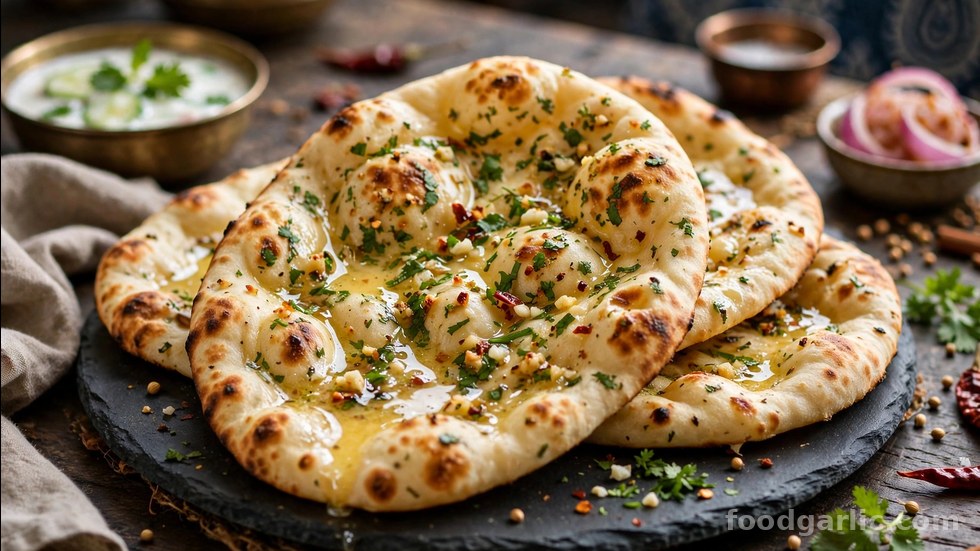
Soft, pillowy, blistered in spots and dripping with garlic butter — restaurant-style naan seems impossible to replicate at home until you try it once. The secret is not a tandoor oven: a screaming-hot cast-iron skillet and a few technique tweaks give you naan that puffs, chars, and folds around curry just like the takeout version. This guide walks you through the dough, the proof, the shaping, and the buttery garlic finish.
What You Need: Simple Ingredients, Big Flavor
Naan dough is wonderfully forgiving and built from pantry staples. Here is everything for about 8 medium naans:
- 3 ½ cups all-purpose flour (plus extra for dusting)
- 1 teaspoon instant yeast (or 1 ¼ teaspoons active dry yeast)
- 1 teaspoon sugar (feeds the yeast, adds gentle color)
- 1 teaspoon fine salt
- ¾ cup warm whole milk yogurt (full-fat plain yogurt gives the best chew)
- ⅓ cup warm water
- 3 tablespoons melted butter or ghee, plus more for brushing
- 1 large egg (optional, but it enriches the dough)
- 6–8 cloves of garlic, finely minced — fresh garlic makes all the difference when cooking with fresh garlic
- 3 tablespoons butter for the garlic butter topping
- Chopped cilantro or parsley and a pinch of flaky salt for finishing
If you are new to handling garlic for recipes, mastering mincing garlic like a pro first will make every step below faster and cleaner.
Making the Dough: Knead It Right
Combine the flour, yeast, sugar, and salt in a large bowl and whisk to distribute everything evenly. In a separate jug, whisk the yogurt, warm water, melted butter, and egg until smooth.
Pour the wet mixture into the dry ingredients and stir until a shaggy dough forms, then turn it onto a lightly floured counter and knead for 8–10 minutes. You are looking for a dough that is smooth, slightly tacky, and elastic — it should spring back slowly when poked. Under-kneaded dough is the number one cause of tough naan, so set a timer and don’t rush it.
Place the dough in a lightly oiled bowl, cover with a damp cloth or plastic wrap, and let it rise in a warm spot for 1 to 1 ½ hours, until roughly doubled.
Proofing Tips for Maximum Softness
- Warm, not hot: an oven with just the light on is ideal. Too much heat kills the yeast.
- Don’t skip the full rise: a properly doubled dough produces the airy bubbles that make naan chewy.
- Punch down gently after rising, then divide into 8 equal pieces and roll each into a smooth ball.
- Rest the balls 10 minutes before shaping — this relaxes the gluten so the dough stretches instead of snapping back.
Shaping the Naan
On a floured surface, roll one ball into an oval or teardrop about ¼ inch thick — the classic restaurant shape. Naan should be thinner in the middle and slightly thicker at the edges. Don’t worry about perfect symmetry; rustic shapes char beautifully.
Press the minced garlic lightly onto the surface of each rolled naan so it stays put during cooking. For more dishes where garlic takes center stage, explore these recipes where garlic is the star.
Cooking: Hot Skillet Method (Tandoor-Style at Home)
This is where the magic happens. A real tandoor reaches around 900°F, but a cast-iron skillet preheated until it just starts to smoke gets close enough to create the same blistered, puffy effect.
Step-by-Step Cooking
- Preheat a cast-iron skillet over high heat for 5 minutes. No oil — dry heat is what chars the dough.
- Place one naan in the skillet, garlic side up. Cook for 60–90 seconds until bubbles form and the underside has browned spots.
- Flip and cook 45–60 seconds on the second side until charred in spots.
- Brush immediately with garlic butter while the naan is steaming hot, then sprinkle with cilantro and flaky salt.
- Wrap finished naans in a clean kitchen towel as you work — the trapped steam keeps every piece soft.
The Garlic Butter Topping
Melt the 3 tablespoons of butter in a small pan over low heat, add the remaining minced garlic, and cook gently for 1–2 minutes until fragrant but not browned. Burned garlic turns bitter, so keep the heat low and pull it off the moment the raw edge softens. Brush generously over each hot naan — this is the layer that makes them taste like the restaurant version.
7 Secrets for Soft, Pliable Naan
- Yogurt is non-negotiable — it tenderizes the crumb and keeps naan soft for hours.
- Roll evenly — thin spots cook too fast and turn brittle.
- Keep the heat high — slow-cooked naan dries out instead of puffing.
- Don’t overload the garlic — too much on the surface weighs the dough down.
- Brush butter while hot — the steam helps the fat soak in.
- Stack and wrap in a towel — the resting steam is a softness multiplier.
- Serve within 2 hours for peak texture; reheating works, but fresh is unbeatable.
Serving Suggestions
Naan exists to be torn and scooped, so pair it with something saucy: butter chicken, chana masala, dal makhani, or palak paneer are classics. Leftover naan? Cut into wedges, toast, and dip in hummus.
Make-Ahead and Storage
Naan freezes beautifully. Cool completely, stack with parchment between pieces, and freeze in a zip-top bag for up to 2 months. Reheat on a hot skillet for 30 seconds per side, then brush with fresh butter.
Frequently Asked Questions
Can I make garlic naan without yeast?
Yes — replace the yeast with 1 teaspoon of baking powder and skip the rise; rest the dough just 30 minutes. The texture will be a bit denser but still delicious and quick.
Why isn’t my naan puffing up?
Almost always the skillet isn’t hot enough, or the dough was rolled too thick. Preheat until the pan smokes lightly and keep naan at ¼ inch or thinner.
Can I use a non-stick pan instead of cast iron?
You can, but cast iron holds heat far better and gives the blistered char that defines restaurant naan. High heat can also damage non-stick coatings over time.
How do I keep the garlic from burning?
Press it gently into the dough so it’s embedded rather than sitting on top, and keep each side’s cook time under 90 seconds. The garlic butter brushed on after cooking adds the big garlic punch anyway.
Is naan the same as pita?
No. Naan uses yogurt, egg, and butter for a rich, soft, chewy crumb and is cooked at higher heat for char; pita is leaner and puffs into a hollow pocket from steam.